No gas line to run
Adding gas service to a home that's never had it means a new line and a vent. Replacing the electric water heater already there skips all of that.

Electric is the right call for most homes here, and it's what you likely have already. Louisiana runs on electricity for heating, and power here is cheap enough that an electric water heater costs less to run than the gas numbers you might see quoted for other parts of the country. Gas makes sense if your home already has a gas line run to where the water heater sits, since the installation is simpler and the cost difference in operating it narrows. If there's no gas line there now, running one just for the water heater adds real cost to the job, and for most homes it isn't worth it next to a straight electric swap. The other point worth knowing: electric water heaters recover slower than gas, which matters if your household goes through hot water fast. For a typical home, that's not a problem. Match the choice to what's already feeding your home, not to what someone in another state tells you to buy.
Adding gas service to a home that's never had it means a new line and a vent. Replacing the electric water heater already there skips all of that.
With electricity priced the way it is here, an electric water heater won't cost you the premium that gas can carry in places where power is expensive.
Maybe the water takes longer to get hot, or it doesn't last as long as it used to with everyone showering back to back. Maybe you've seen rust around the base of the tank, or a puddle on the floor near it. An electric water heater that's struggling usually shows it in the shower first, water that goes lukewarm sooner than it should. If it's actually leaking, that's not something to wait on. Water pooling at the base means the tank itself has failed, and it will keep leaking until it's replaced. Left alone, that means water damage to the floor and whatever's stored nearby.
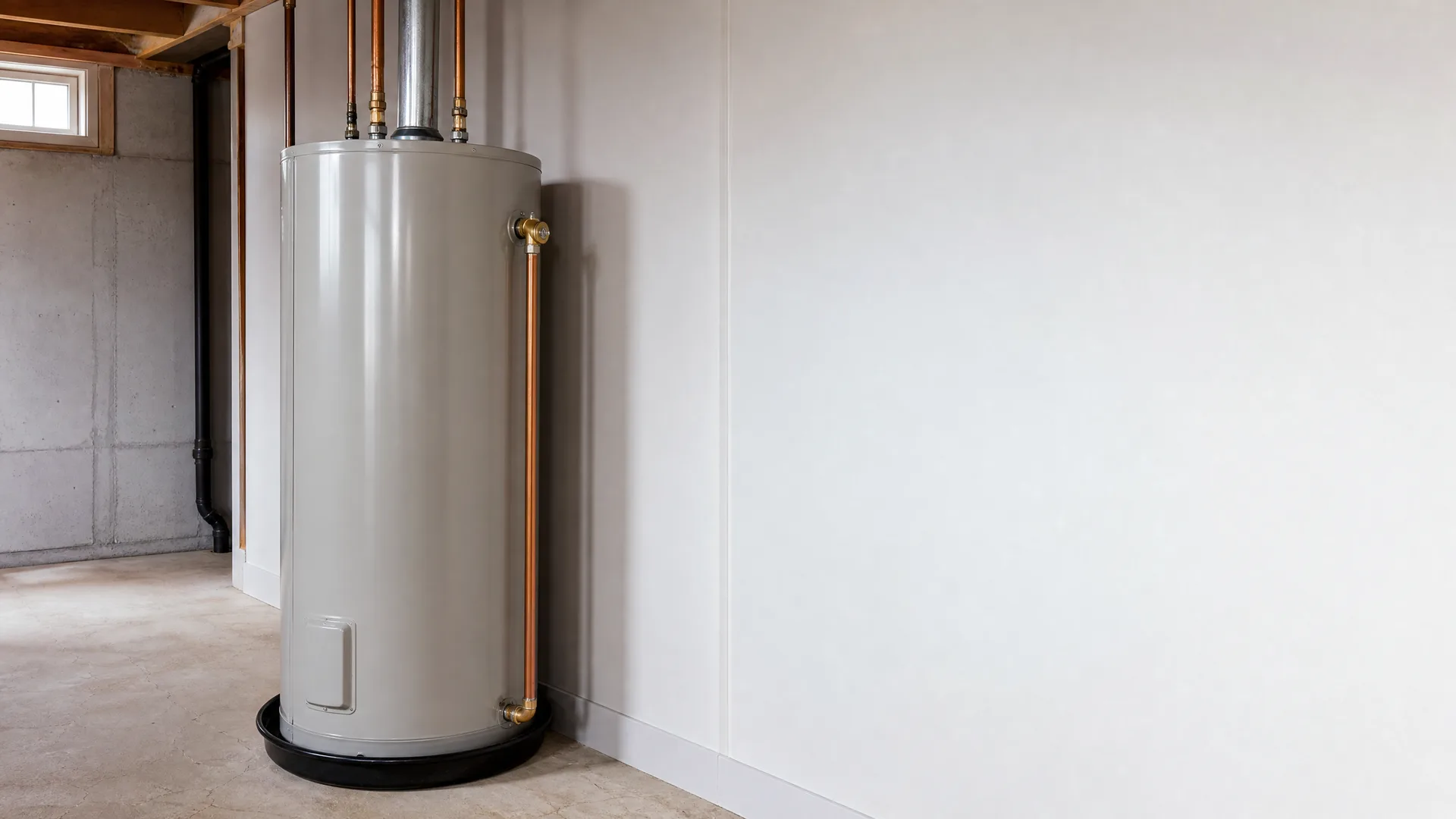
If your home already has a gas line run to the water heater, staying with gas keeps that installation simpler than switching. A gas water heater recovers faster, so a big household that empties a tank fast gets hot water back sooner. If you cook with gas too, you're already paying for the line and the meter, so running the water heater off it doesn't add a new monthly charge on top.
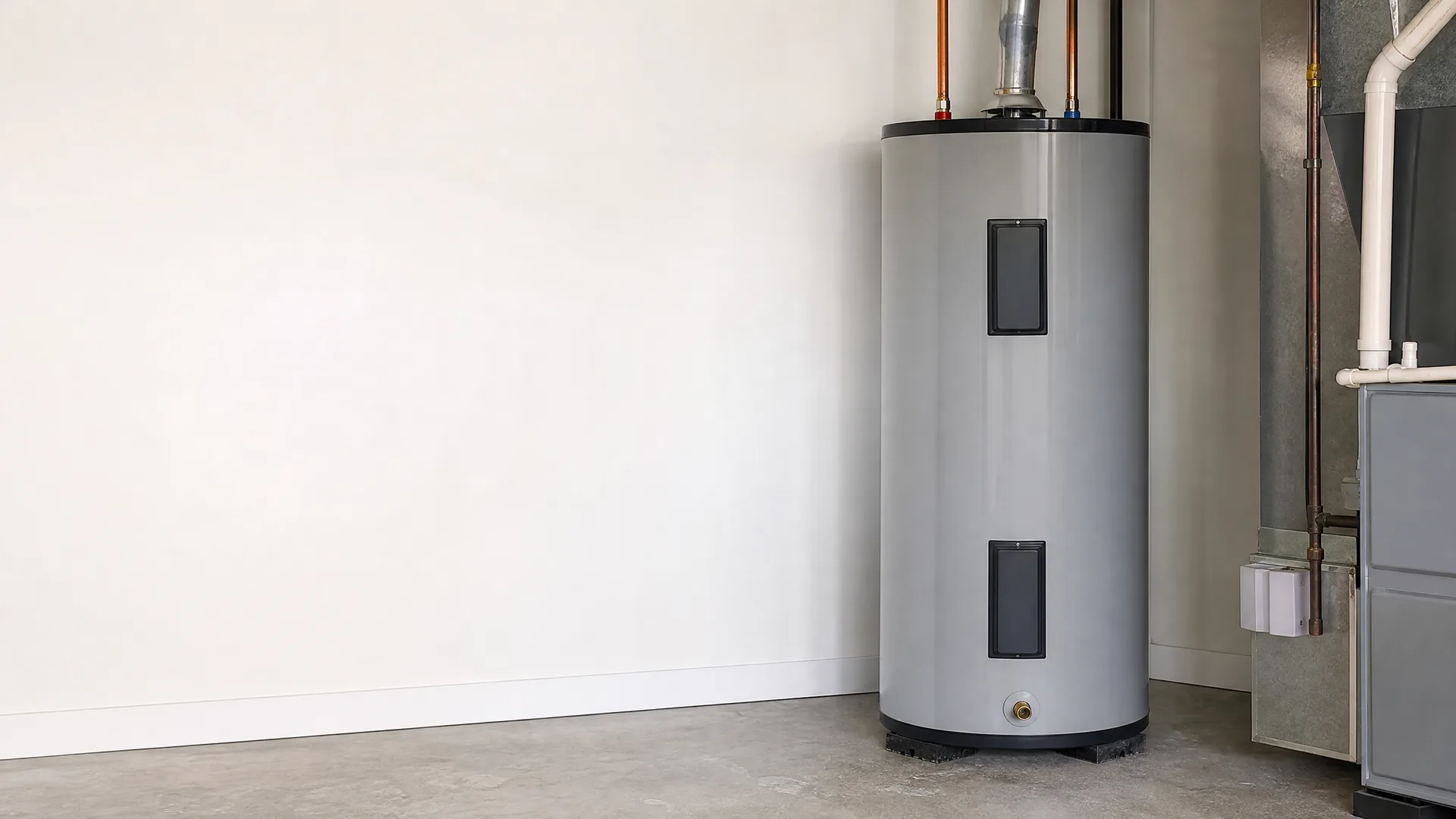
Most houses in Louisiana were never built with a gas line to the water heater, and running one in now means new pipe and a new vent through the roof or wall. An electric water heater installs where the old one sat, using the wiring that's already there. With power priced the way it is here, you're not paying a premium to skip the gas work. For most homeowners, that's the simpler and cheaper path.

Inside the tank are two heating elements, one near the top and one near the bottom. The thermostat calls for heat, the lower element fires first, and it stays on until that water reaches temperature. The upper element only kicks in when there's heavy demand up top, like a shower running right after the dishwasher finished. There's no flame, no vent, no burner assembly to clean or adjust. Just the elements, the thermostat, and the wiring that feeds them.
That simplicity is why replacement is usually straightforward when the unit already there is electric. There's no flue to route, no gas line to inspect or extend, no combustion air to plan for. Once you request service, you're not stuck calling around to find out who even handles water heaters in your area, repeating the same description of your rusted tank to three different companies, then trying to line up their quotes against each other. That part is off your plate the moment you send the form.



Skip collecting and comparing quotes for the new water heater.
No charge to send it. You decide if you hire them.
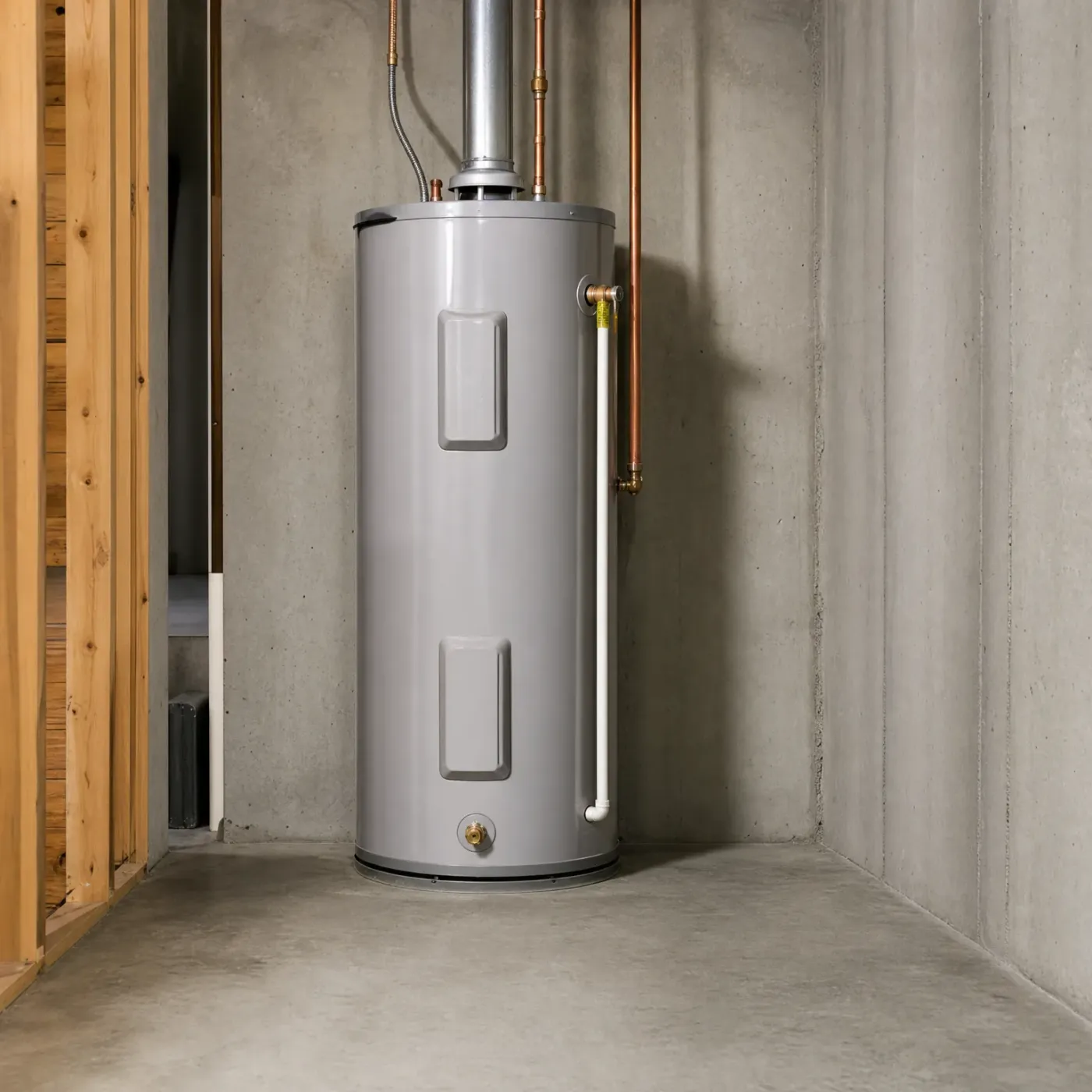
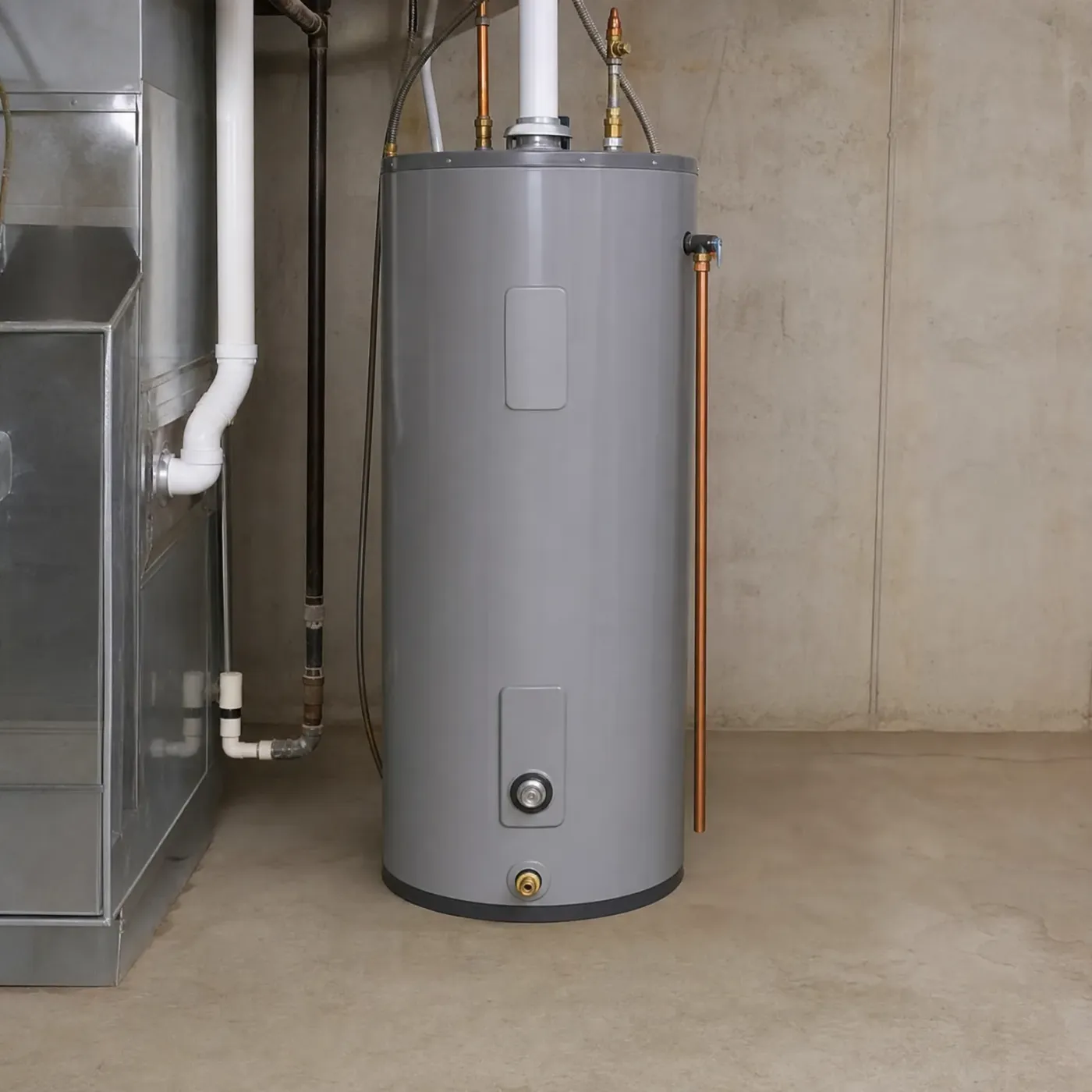
The flue vent and copper lines run straight up from the top, and the relief valve discharge pipe sits clean against the side. No rust on the tank itself. This is what tells you the unit still has years left in it.
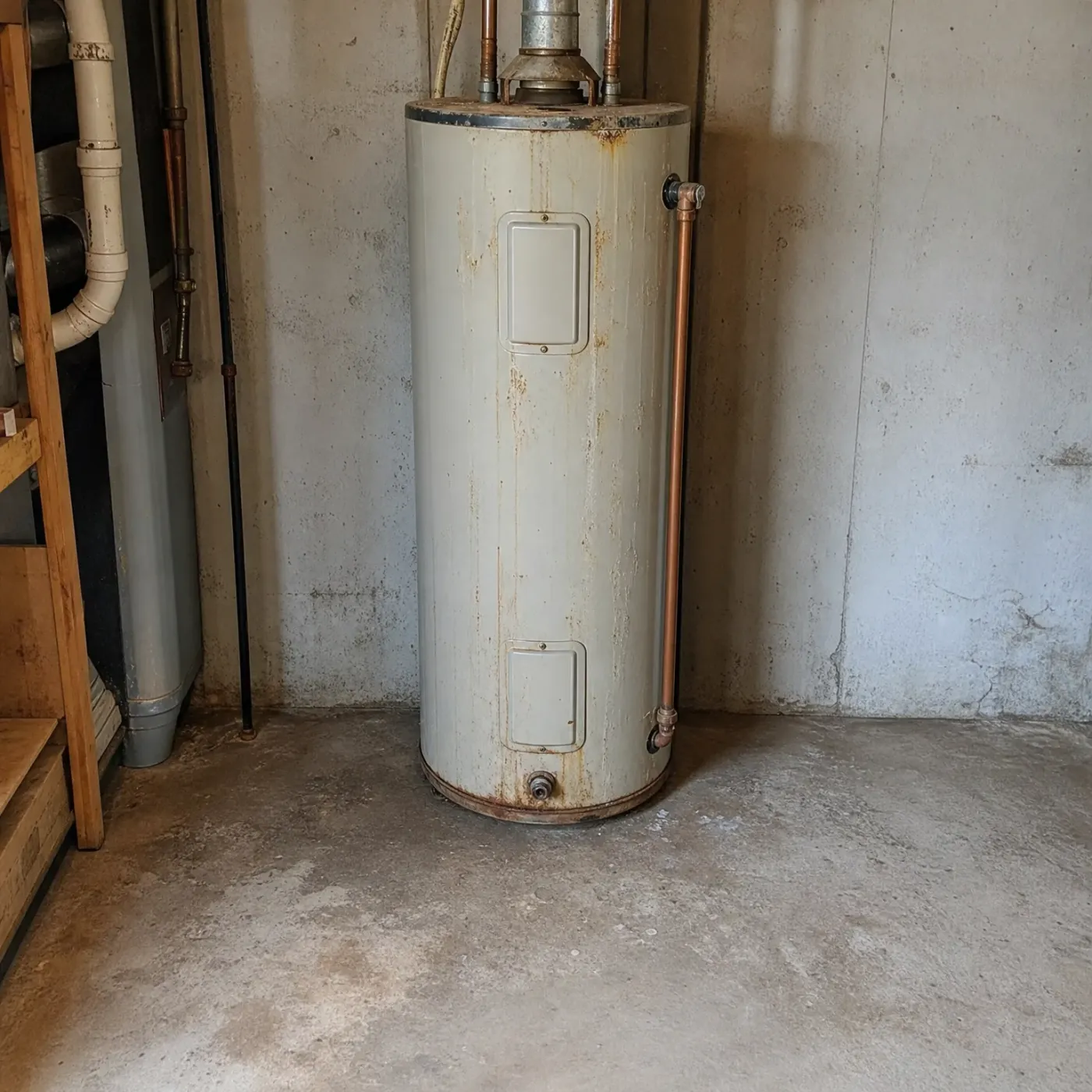
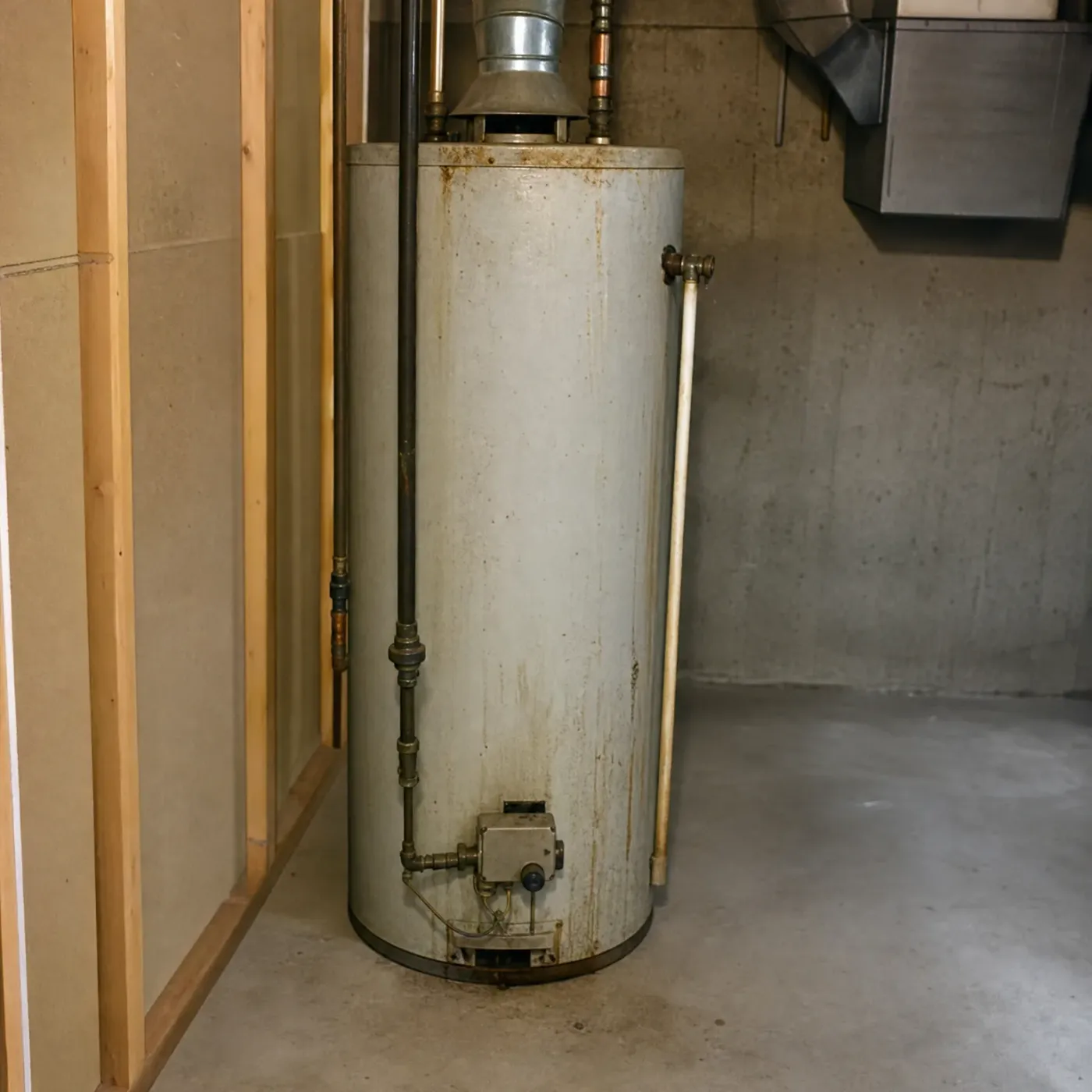
Rust spreads across the whole surface, not just a spot near the bottom. Once corrosion gets like this, the tank wall is thinning from the inside too. Waiting on a unit that looks like this usually ends with a flooded utility area.
Back to back showers in the morning and by the last one the water is running lukewarm. You wait a while and it comes back, but it takes longer than it feels like it should, and you're wondering if that wait is normal for an electric water heater or a sign something in the tank isn't working right.
An electric water heater only runs one heating element at a time. The lower element does the work of reheating the tank after a draw, and it has to bring that whole tank back up before the upper element even gets involved again. A gas burner heats the water straight through from the bottom and recovers faster because of it. That's the tradeoff for the lower operating cost electric gives you here. If recovery feels slower than it used to, check the lower element first. A failing element still lets some hot water through on a light draw, but it falls behind fast once three or four showers run in a row.




That 64.7% is most likely why you've got an electric water heater sitting in a closet or garage right now instead of a gas one. Replacing it with another electric unit means the wiring and the spot it sits in are already set up for it.
ACS 2020-2024 5-year B25040
Electric is the answer for most homes in Louisiana, and it's likely the answer for yours. The wiring is already there. The spot in the closet or garage is already set up for the tank that's sitting in it now. Power here is priced low enough that running electric doesn't cost what the gas comparisons out there would have you believe. None of that changes if your tank is rusting at the base, leaking onto the floor, or leaving you with lukewarm water by the third shower. Those are signs the tank has reached the end, not reasons to reconsider the fuel. Gas still makes sense for one kind of home: the one that already has a gas line run to the water heater. If that's not your house, running a new line and a vent just to install gas is a bigger job than the one you actually need. For almost everyone else, this comes down to replacing what's there, in the spot it already sits, with the same fuel it already runs on.
Once you know that much, the only thing left is finding someone licensed to do the swap who can look at your specific tank and confirm it. That's the part that usually eats an afternoon, calling around, explaining the same leak or the same rust three or four times, trying to tell a fair quote from a padded one. Send the form once and that search stops being something you have to do yourself.





Fill out one short form instead of calling around.
There's no charge for the request.
