 Get matched
How long a water heater lasts in Louisiana
A local installer who puts in water heaters gets your project.
A water heater in Louisiana usually runs 8 to 12 years. Tank units on the shorter end, especially once the anode rod is spent and the tank starts rusting from the inside. The heat itself isn't the hard part on these units, it's the tank holding water day after day for a decade or more.
Most homes here heat with electricity, and electric water heaters tend to hold up a little longer than gas ones since there's no burner or flue to corrode. That's some comfort, but it doesn't change what happens once a tank starts to go. A slow leak at the bottom seam, a pilot or element that won't hold, water that runs lukewarm no matter how long you wait. Those are signs the tank is done, not something to patch.
If yours is getting up toward that range, the question isn't whether to replace it. It's who you call and how fast they can get someone out. That's a different job than fixing what's there. It means knowing which unit fits your home, your water use, and what's already run to that spot for gas or power, and getting it installed correctly the first time.
You don't have to figure that part out alone. Once you send in what's going on, that search becomes someone else's job, a contractor who works in your area and installs water heaters for a living reaches out to you directly. No need to vet a list of names or guess who actually knows what they're doing. You just wait for the call.
Louisiana summers are hard on a lot of things in a house, but a water heater mostly just needs to be replaced before it fails on its own terms instead of yours. Send in your information and let someone qualified take it from here.
Most water heaters in Louisiana last 8 to 12 years. Tank units tend to land on the shorter end of that range because the tank holds water around the clock, and once the anode rod wears out, the steel underneath starts to rust from the inside. Heat doesn't break a water heater. Corrosion does. Most homes here run electric water heaters, and electric tanks don't have a gas burner or venting to fail first, so the tank itself is usually what gives out. Past 10 years, a leak becomes more likely each year it keeps running, and a leaking tank usually means replacement, not repair. If your water heater came with the house or you don't know its age, the data plate inside the access panel or near the top of the tank has the manufacture date. That date tells you more about what's coming than how the unit is running today.




Inside every tank heater is a rod of magnesium or aluminum that's meant to corrode. It draws the rust to itself so the steel tank stays protected. That rod doesn't last the life of the unit. Once it's spent, usually a few years in, the tank itself takes over as the thing corroding, and steel doesn't heal the way the rod did. Sediment adds to the problem, settling at the bottom and forcing the lower element to work through a layer of buildup to heat the water above it. Since electric units skip the flue and burner altogether, there's less to go wrong on the heat side. When one of these fails early, it's almost never the heating element on its own. It's the tank. And a tank that's failing usually gives some warning first, a reddish stain near the drain valve or a fitting, before it turns into an actual leak at the bottom. That leak means the tank is done. There's no patching it. The only option at that point is a new water heater.
What's Actually Going On Inside the Tank
- The anode rod inside the tank corrodes on purpose, drawing the rust away from the steel so the tank doesn't have to.
- Once that rod is used up, usually a few years in, the tank itself starts corroding and there's no fixing that part.
- Sediment settles at the bottom of the tank over time, and in hard water areas that layer builds faster and makes the lower heating element work harder.
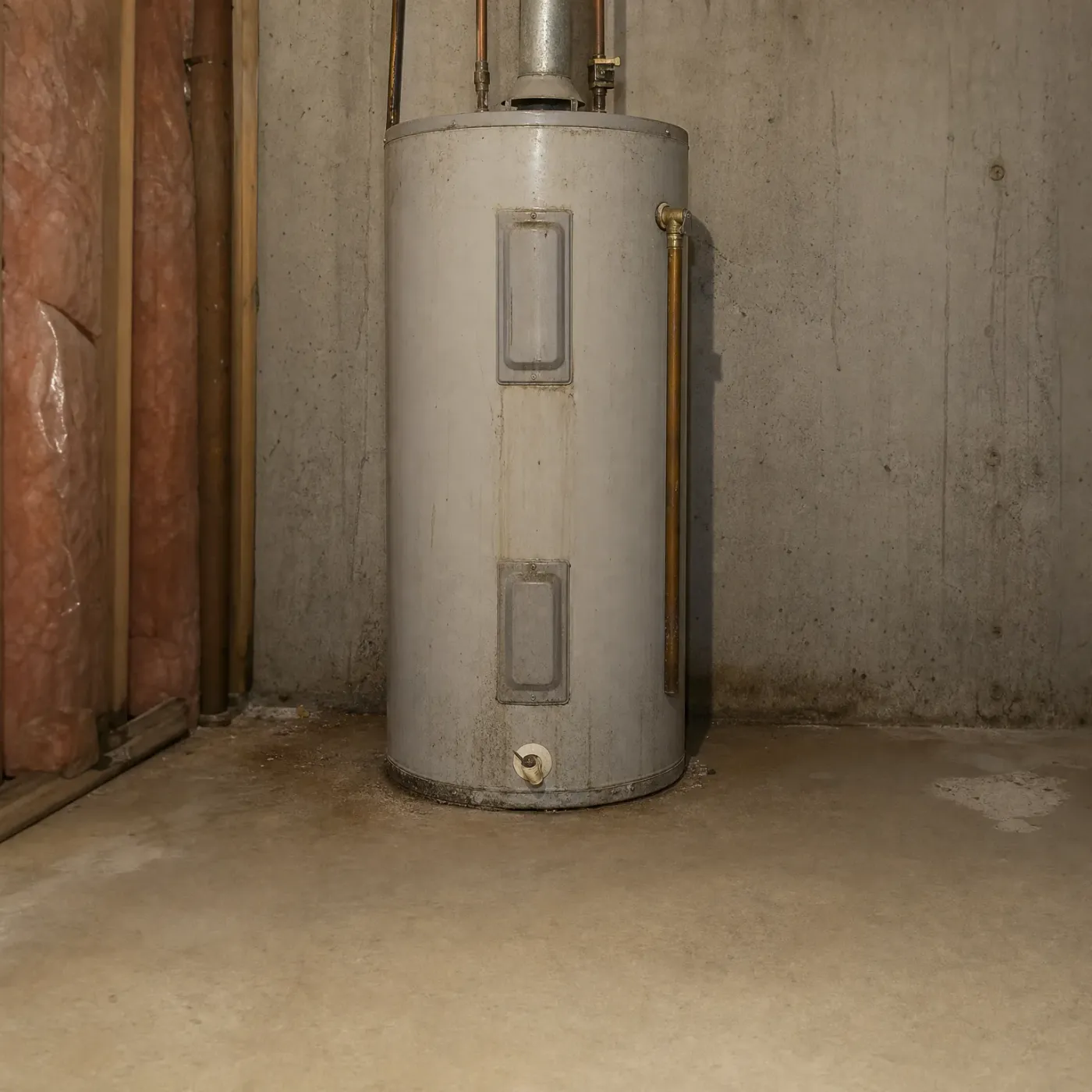
- A tank that's rusting from the inside will often show it on the outside first, as a reddish stain around the drain valve or a fitting.
- Electric water heaters don't have a flue or burner to maintain, so when one fails early it's almost always the tank or an element, not the heat source.
- A leak at the bottom of the tank means the tank has failed and the unit needs to be replaced, not repaired.
Get your water heater to the right pro

One request and the search for a pro is handled.
There's no charge for the request.
What cuts a tank short here
Electric water heaters hold up well mechanically since there's no gas burner or flue to maintain, but the tank itself doesn't care what powers it. Louisiana's groundwater runs harder in some parishes than others, and that mineral content settles as sediment on the bottom of the tank. A layer of sediment sits between the heating element and the water, so the element works harder and the tank wears faster than it would with cleaner water. None of this shows up until the anode rod is already gone, which is usually when a tank starts rusting through instead of just running less efficiently.
Why replacement timing is hard to guess
A tank can fail without warning once the steel starts going, since a pinhole leak doesn't announce itself the way a strange noise or a lukewarm shower does. Some homeowners get a few extra years past 12 because their water is softer or their tank saw lighter use. Others see trouble at 8 because the anode rod wore out early and nobody replaced it. The model number on the tank lists the manufacture date, so checking it against today's date is the only real way to know where a given unit stands, rather than going by how old the house is or how the water has looked lately.
64.7% of homes statewide heat with electricity
Most homes in Louisiana run an electric water heater, so there's no burner or flue to worry about. The tank itself still wears out the same way, rusting from the inside once the anode rod is gone, so the 8 to 12 year range holds either way.
ACS 2020-2024 5-year B25040


Knowing where you stand
- Most water heaters in Louisiana hold up for 8 to 12 years before the tank itself gives out.
- The anode rod decides most of that timeline, since the tank starts rusting once the rod is spent.
- Electric units common here skip the burner and flue problems, but the tank still corrodes the same way.
- Harder groundwater in some parishes adds sediment that shortens the tank's working life.
- Once you know roughly where your water heater stands in that range, replacing it on your terms beats waiting for it to fail.
- A contractor who knows your parish's water can size and place a new unit to get the most years out of it.
Eight to twelve years is the range, and the anode rod is what decides where in that range your tank falls. Once it's spent, the steel starts rusting on its own, and nothing reverses that. Electric units, which is what most houses here run, don't have a burner or flue to fail, but that doesn't change what happens to the tank. Water hardness varies by parish, and harder water leaves more sediment at the bottom, which adds to the wear the rod can't stop by itself.
None of this means you need to wait for a leak to find out where you stand. A tank nearing the end of its range is worth planning around rather than reacting to once it fails in a utility closet or garage. Replacing it on your schedule, instead of the day it stops working, means picking the unit and the install date instead of taking whatever's available on short notice.
A contractor who works in your parish knows what the water there does to a tank over time, and can size and place a new one accordingly. Once you send the form, the work of finding that contractor is off your plate. Someone who fits what you need will be in touch, and from there it's a conversation, not a scramble.

Water Heater Installation
The right pro for this job

- Say what's going on with your water heater, and a pro who works on them reaches out.
- A local pro who knows water heaters gets your details and gets in touch.

- Send the form and stop researching installers for the new water heater.
- One request ends the search for a water heater installer.

- One form replaces the calls you'd make to find a water heater pro.
- Skip the round of in-home estimates for a new water heater.

- One installer gets your project, so there's no bidding war over it.
- Your request stays with one local pro.