Send the form and the search for an installer is over.
A heat pump water heater pulls heat out of the air around it instead of making heat with a coil or a flame. In most of Louisiana that works in its favor. The air around your water heater stays warm for most of the year, so the unit has plenty to draw from. The question is whether that saves you anything when power here is already cheap and most homes heat with electricity to begin with.
The honest answer depends on where the water heater sits. A garage or a closet off the house stays warm most of the year, and that is exactly the condition this kind of unit wants. It also pulls some humidity out of that space while it runs, which matters in a state where summers are muggy and that air sits heavy indoors. If your water heater is in an unconditioned space with some room around it, a heat pump unit has a real shot at paying you back over the years you own it. If it is crammed in a small closet with no airflow, that same unit may struggle to pull enough heat from the air to run efficiently.
None of that tells you whether your own setup can take one. These units are physically bigger than a standard tank, they need clearance on all sides, and they need somewhere for the cold air they produce to go. A contractor who can look at your space, your current tank, and your electrical setup is the only way to know if this makes sense for your house specifically.
Finding that person yourself means searching, calling a few numbers, explaining your water heater and your closet over and over, then sitting on quotes trying to compare them. Send the form below instead, and that search becomes someone else's job instead of yours.
Is a heat pump water heater worth it in Louisiana?
You have a water heater to replace or you're building out a new one, and you keep seeing heat pump water heaters come up as the efficient choice. With power cheap here and most homes already running on electricity, you want to know if switching actually pays off for a home in Louisiana, or if it's a feature built for somewhere colder.
Yes, in most Louisiana homes it's worth it
A heat pump water heater uses a fraction of the electricity a standard electric tank does, because it moves heat instead of generating it with a resistance element. Louisiana's warm, humid air works in its favor almost year round, so the unit rarely has to lean on its backup heating element the way it would in a cold basement up north. That means the savings show up on your electric bill every month, not just in summer. Power here is cheap already, so the dollar savings per month will be smaller than in a state with high electric rates. The unit still costs more to install than a standard tank, and that gap is what you're weighing against the lower running cost.
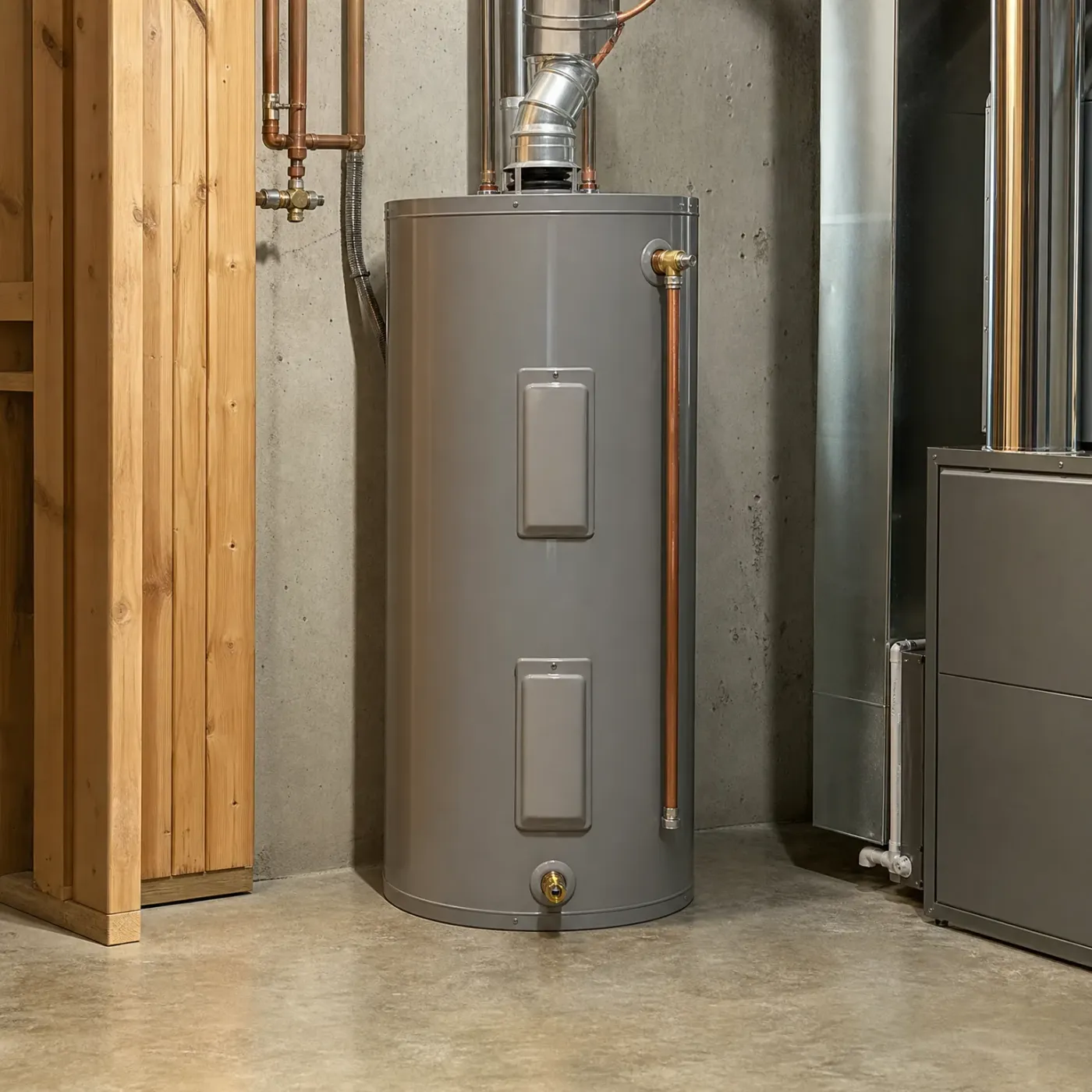
A standard electric water heater doing its job
This is what a working tank looks like: the fittings dry, the flue clear, the floor underneath it clean. It will heat water for you for years this way. The question is just what it costs you in power each month to keep doing it, given how cheap that power already is here.
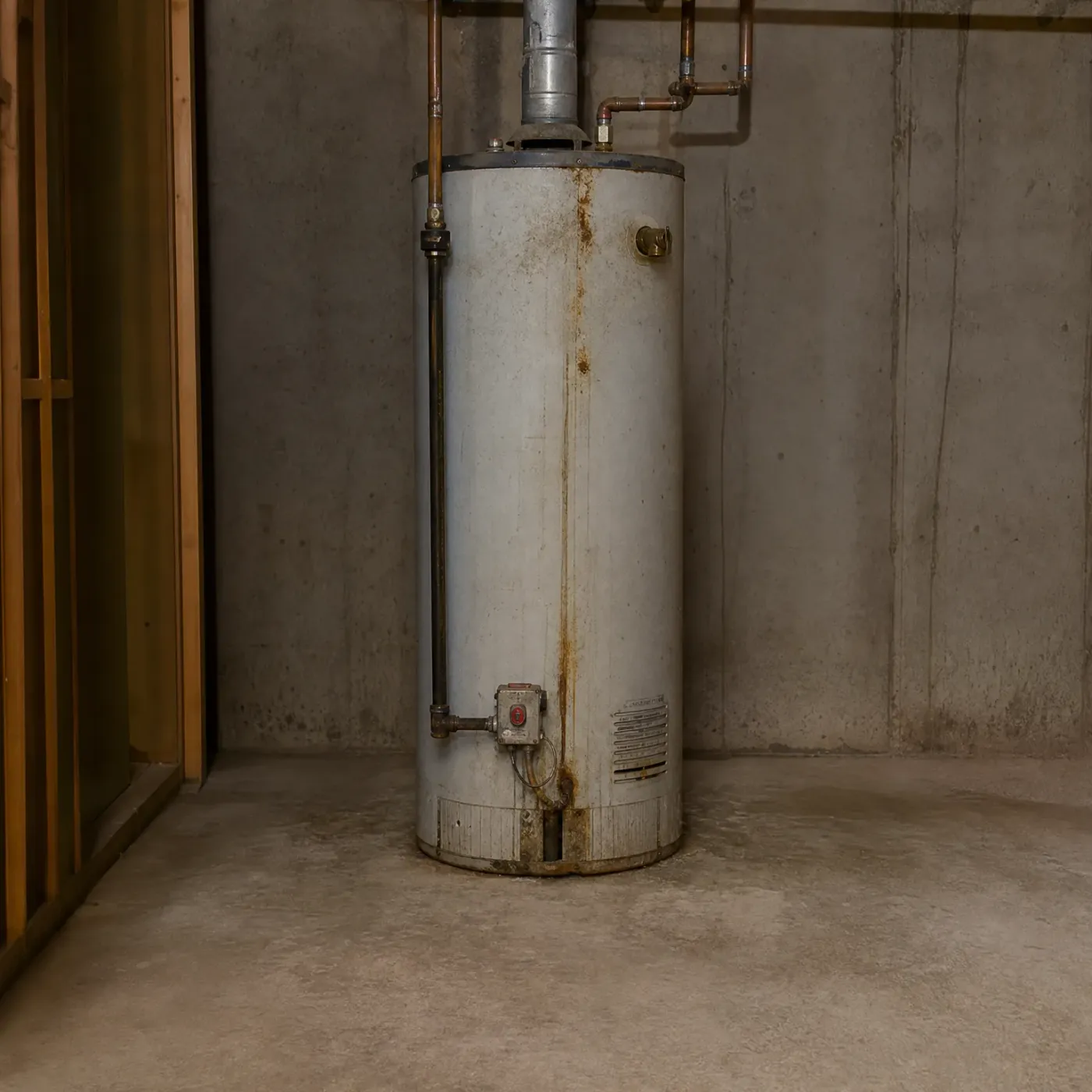
A tank nobody replaced in time
Rust like this doesn't start on the day a tank fails. It builds for a while first, and the gas valve and thermostat near the base are usually the first signs you'd notice, if anyone was looking. Louisiana's humidity moves this along faster than it would somewhere drier.
Heat Pump or Standard Tank
Heat pump water heater
It draws most of its heat from the surrounding air, so it uses less electricity than a standard electric tank to heat the same amount of water.
It needs room to breathe, usually a space of at least several hundred cubic feet, so a small closet may not work without ducting.
It cools and dries the air right around it, which is a benefit in a garage or utility room but can be unwelcome in a conditioned space in January.
It runs quieter in theory but the compressor and fan do make noise, more than a standard tank makes sitting there doing nothing.
Installation is more involved than swapping tank for tank, since the unit needs clearance and sometimes a condensate drain.
Standard electric tank
It heats water with electric resistance elements, which costs more per gallon of hot water than pulling heat from the air.
It fits in the same tight closet or alcove the old one came out of, since there's no air clearance to work around.
It runs silent except for the occasional tick of the elements, with no compressor or fan noise at all.
It doesn't care what the room temperature is or how humid the air is, so where it sits makes no difference to how it performs.
Replacing one is a straightforward job most of the time, since the connections and the space are already set up for it.
A heat pump water heater costs more upfront than a standard electric tank, and that's usually what stops people. With power as cheap as it is in Louisiana, the monthly savings take longer to catch up to that difference than they would somewhere with higher rates. So the real question isn't whether the unit works here. It does. It's whether the math pencils out for your household, your usage, and the space you have for one. That's a judgment call, and it depends on specifics a page can't know about your home. A contractor who installs these in Louisiana houses can look at your current setup, your tank, your closet or utility space, and tell you straight whether it's worth the swap or whether your money is better spent elsewhere. Instead of calling around to a handful of installers and explaining your situation each time, you send it once and let someone who does this work daily give you a real answer.
What the unit pulls heat from
A heat pump water heater moves heat out of the air in the room and puts it into the tank. It needs a steady supply of air that isn't already cold, which is why the space it sits in matters as much as the tank itself. A garage or utility closet that stays warm most of the year gives it something to work with. A small, sealed closet doesn't.
What it leaves behind in the room
Pulling heat out of the air cools and dries that air down, the same way a dehumidifier does. In a closed utility room this can drop the temperature several degrees and pull noticeable moisture out of the air. Some homeowners route that effect to use, cooling a laundry room that runs warm anyway. Others find it makes an already small space feel cold underfoot.
64.7% of homes statewide heat with electricity
Most homes in Louisiana already run on electric water heaters, so swapping to a heat pump model doesn't mean rewiring anything. It plugs into the same setup your tank uses now and pulls most of its heat from the air instead of drawing it all from the grid.
ACS 2020-2024 5-year B25040
A heat pump water heater makes sense in Louisiana because the air around it stays warm enough to draw from most of the year, and the lower electric use shows up on the bill even with power priced as low as it is here. The upfront cost is the real tradeoff, and that's a question only your situation answers. What doesn't have to be hard is finding someone to install it right, size the space correctly, and set it up to actually pull that savings. Rather than calling around to different contractors, explaining your water heater setup over and over, and sorting through quotes that all price things differently, you can send one form and let that search be someone else's job instead of yours. You already know the equipment is worth considering. What's left is getting it put in by someone who does it well.
Water Heater Installation
Finding a pro stops being your job
Step 1 of 3: Equipment
A local installer who puts in water heaters gets your project.
Get in touch with a local installer about a new water heater.
One request and the search for a pro is handled.
Send it once and finding someone is no longer on you.
Describe the project once instead of to every installer.
Answer a few questions instead of calling shop after shop.
Your request stays with one local pro.
Your request goes to one pro, not a list of companies.