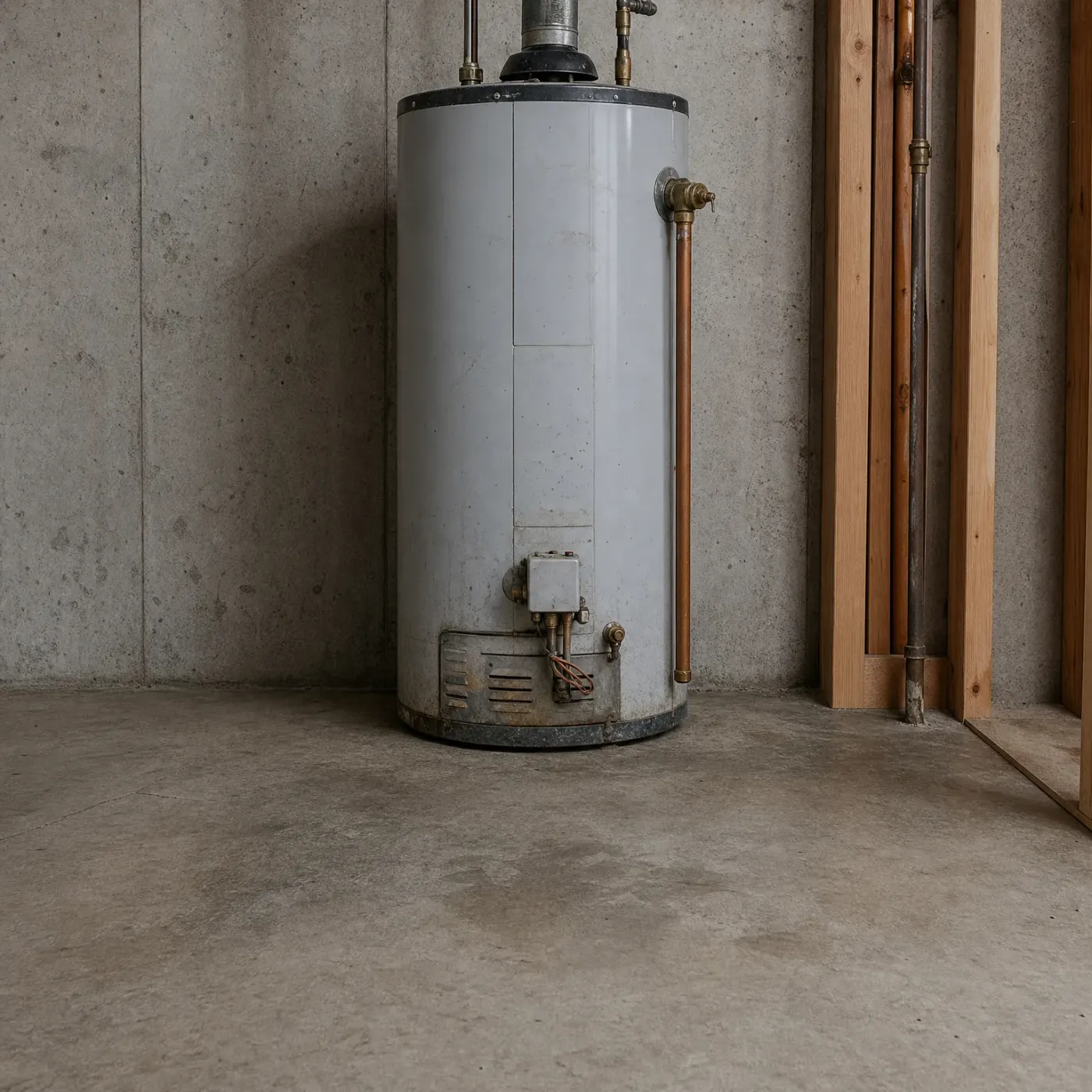
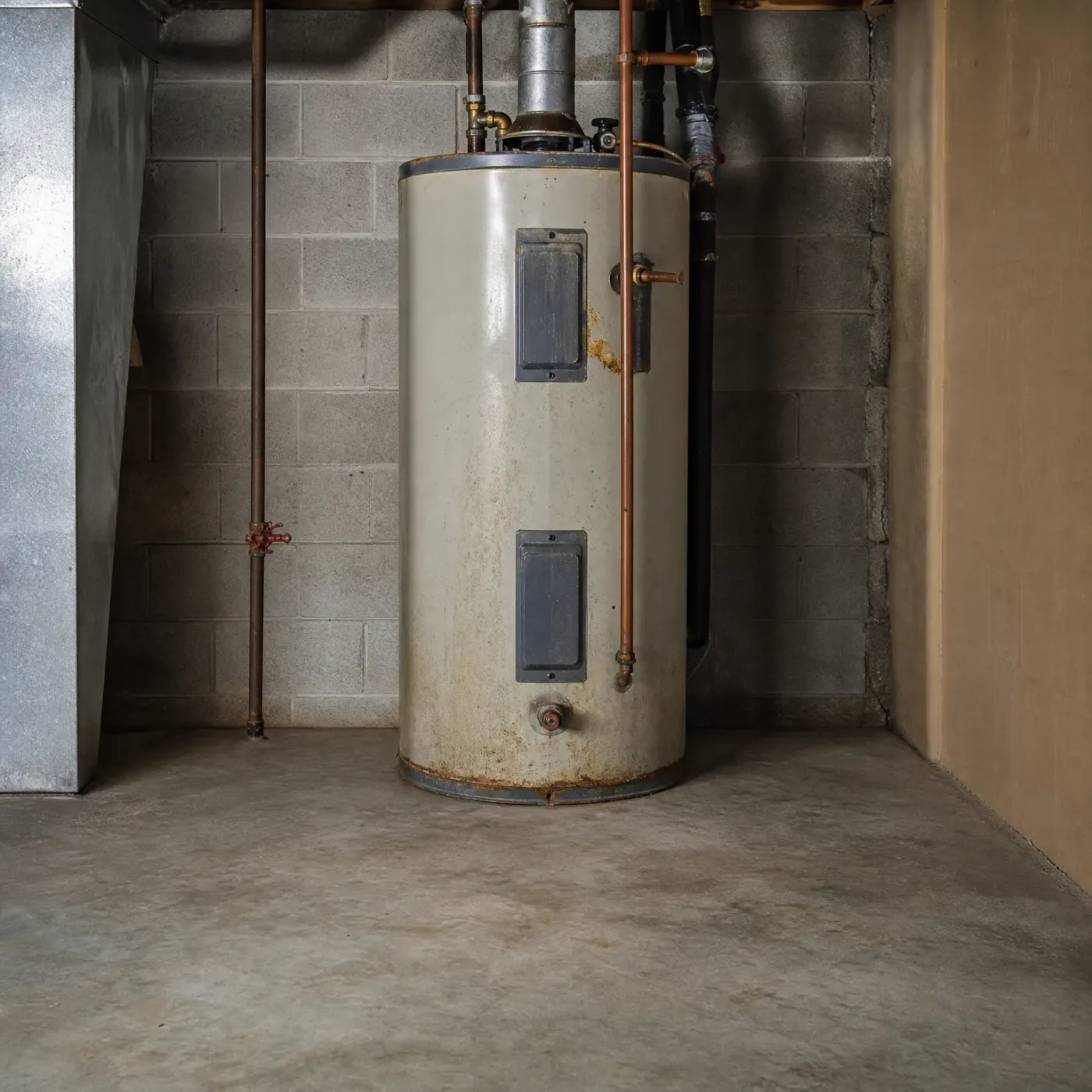
A large gray cylindrical gas water heater with copper and black pipes and a flue stack, standing on a concrete pad against a concrete wall, with a dark metal shelving unit in the background.

Stop chasing a water heater pro

Tank or tankless water heater for a Louisiana home

Tank or tankless comes down to how your home uses hot water and what gas or electric setup you already have. With electricity cheap here and most Louisiana homes wired for it rather than piped for gas, that changes which option makes sense. This page walks through how to decide, then hands the install to a licensed contractor so you're not the one calling around to find one.

Hand it off

Most Louisiana homes do fine with a tank, and the reason comes down to power. Electric tankless units need a big dedicated circuit to heat water fast, and running one on electricity costs more day to day than running a tank does, because a tank warms water slowly over hours instead of all at once. Gas tankless avoids that draw, but it means having a gas line to the water heater, which most homes wired for electric heat don't have. A tank also holds up fine against Louisiana's muggy summers and doesn't ask anything extra of your home's electrical panel. If your home already has gas plumbed in, tankless is worth a real look. If it doesn't, a tank is usually the simpler and cheaper path, and the choice is really about what's already run to that spot in your house.

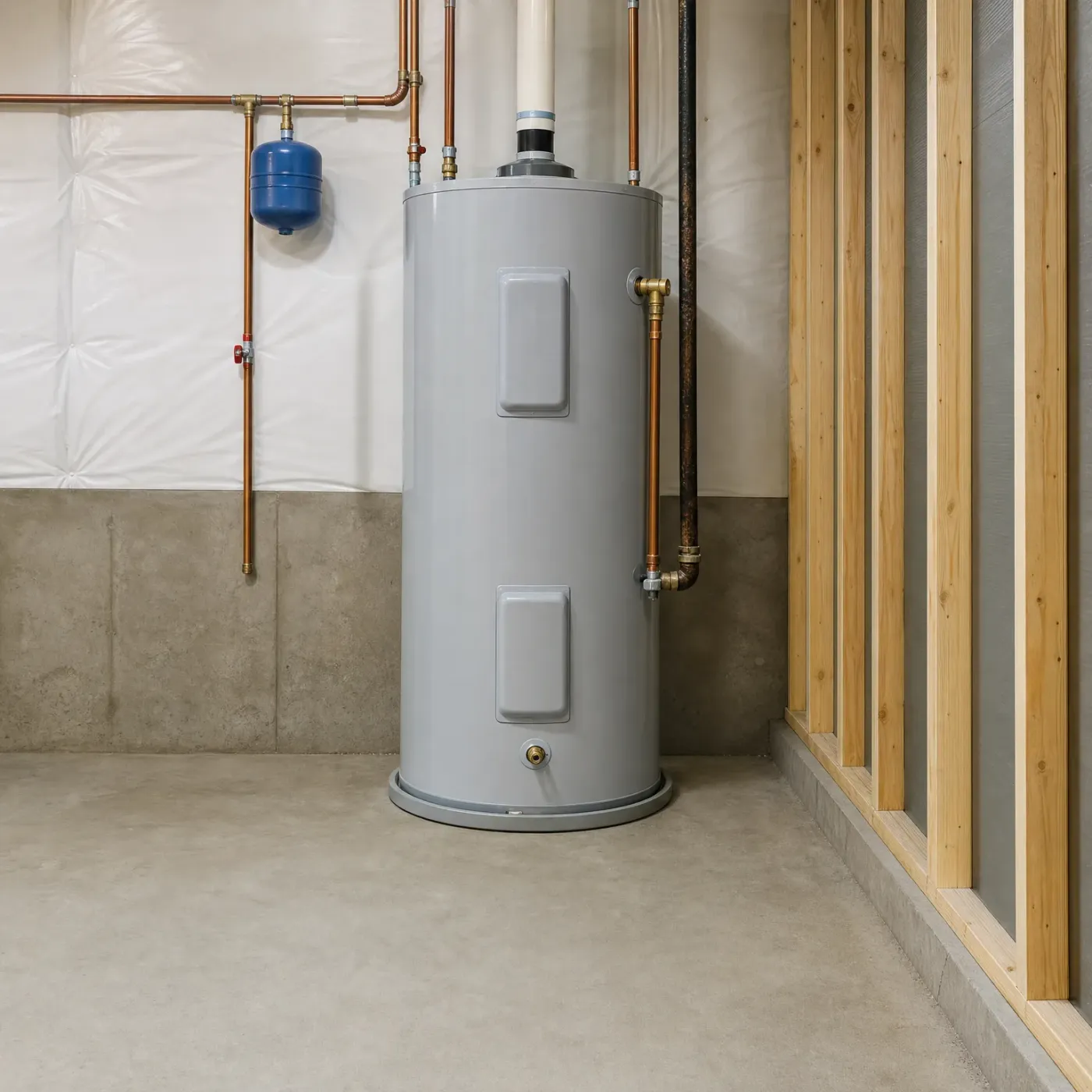
A gray cylindrical water heater stands on a concrete basement floor against a plastic-sheeted insulated wall, with copper supply pipes, a blue expansion tank, a black vertical pipe, and exposed wood wall framing at right.
A tank like this one keeps a reserve of hot water ready, so recovery between showers is just a matter of waiting on the element.
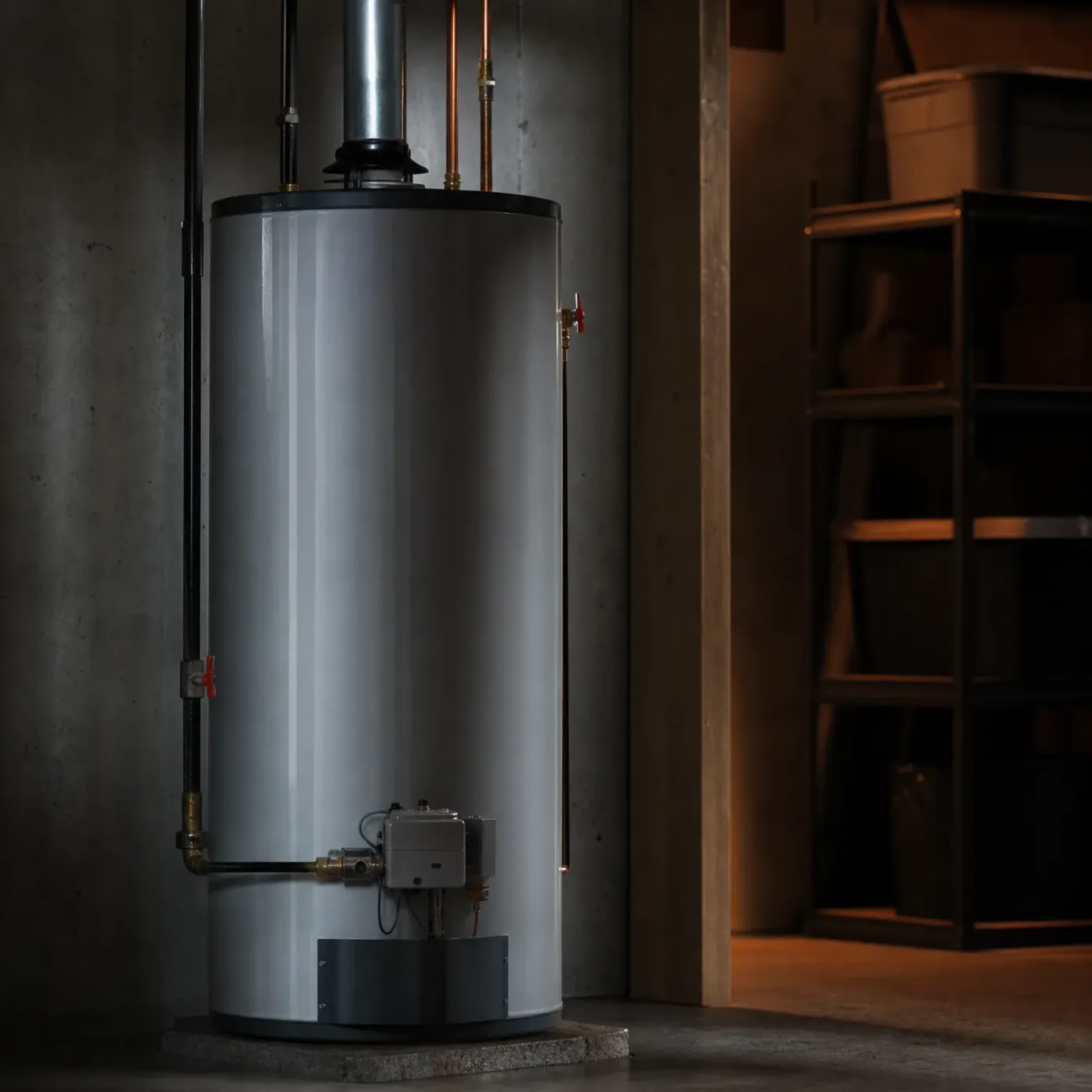
An older gray gas water heater with copper and brass piping stands on a concrete floor against a concrete wall, beside exposed wooden wall framing and vertical pipes.
Rust and grime around the burner like this mean the tank is failing, not the type of heater you chose.

How an electric tank heats water

  • Electric tank water heaters use one or two heating elements, each pulling around 4,500 watts, to bring a full tank up to temperature.
  • A thermostat clipped to the tank wall checks the water against a set point and switches the top or bottom element on as needed.
  • The bottom element does most of the work once the tank is full, since it heats the incoming cold water at the base.
  • Recovery time depends on the element's wattage and the size of the tank, not on anything about your house's wiring.
  • A tankless electric unit needs several elements firing at once to heat water on demand, which is why it draws so much more power than a tank.
  • Sediment settling at the bottom of a tank can coat the lower element and slow recovery long before the unit actually fails.

Inside an electric tank, two elements split the work. The top element handles the water nearest the outlet, so your first few minutes of hot water come from there. Once that layer cools from use, the thermostat switches it off and brings in the bottom element, which sits low where the cold supply line feeds in. That bottom element is the one doing the heavy lifting on a busy morning, because it's heating water straight off the incoming line rather than water that's already warm. Each element pulls close to 4,500 watts, and a standard 240 volt circuit handles that without strain. That's part of why tanks suit homes here so well: the load is steady and known, not a spike that calls for upgraded wiring.

A tankless electric unit works differently. There's no reserve sitting in a tank, so when you turn on the tap, several elements have to fire together to bring water up to temperature on the spot. That's the draw that pushes the circuit size and the running cost up.

One thing worth knowing on a tank: sediment collects at the bottom over time and settles right on top of the lower element. That buildup acts like a blanket, slowing how fast that element can heat incoming water, and it'll show up as longer waits before the tank catches up, well before anything is actually broken.

A man in a gray sweater reclines in a brown leather armchair with his eyes closed, beside a wooden side table holding a mug, a folded newspaper and a potted plant, with a bookshelf and sunlit window behind him.
A man with greying hair and a dark sweater leans back on an armchair with his eyes closed and a slight smile, in a living room with a bookshelf, plant, folded newspaper and mug on a wooden table.
A man in a gray fleece jacket sits reclined in a leather chair with his eyes closed, in a room with bookshelves, a table lamp, a window, and a desk holding a folded newspaper and a dark mug.
A bearded man in a gray fleece pullover sits with eyes closed in a brown leather armchair in a living room, with a floor lamp, bookshelf, potted plants, a side table holding newspapers and a dark mug, and a bright window behind him.
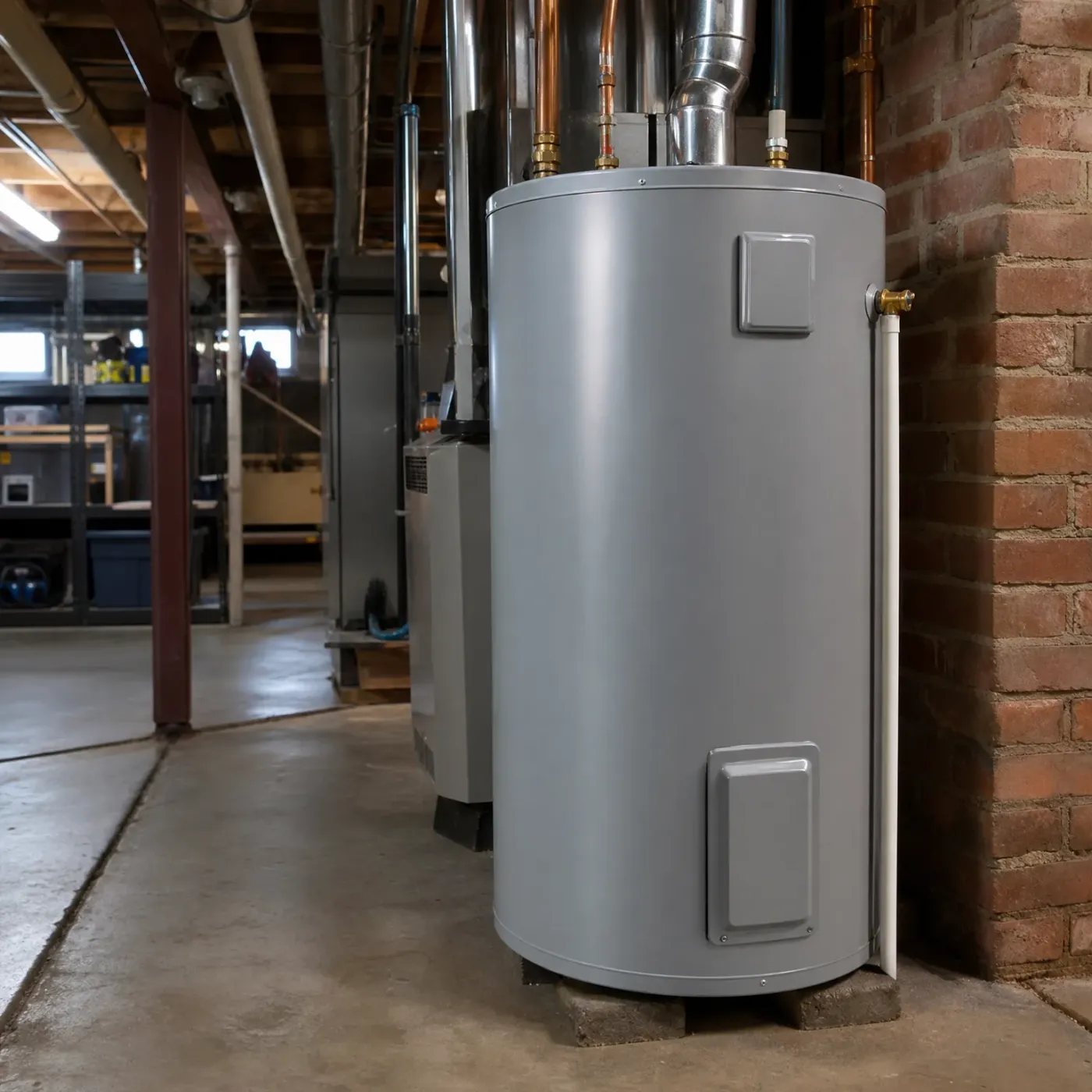
A gray cylindrical water heater with two access panels stands on concrete blocks beside a brick wall in a basement, with copper and metal pipes above and shelving visible in the background.

Send one request and you're done looking

Describe your water heater job once, to one pro.

Send the form and stop researching installers for the new water heater.

Start one form

Sending the form costs nothing.

Tank or Tankless: Weighing Your Options

Tank

  • Installs onto the electric circuit most Louisiana homes already have, so there's no panel upgrade to budget for.
  • Costs less to run on electricity than a tankless unit would, since the elements only heat what's sitting in the tank.
  • Recovers slower once it's empty, so a houseful of back to back showers can mean a wait for the last person.
  • Takes up closet or garage space for the tank itself, which matters if that space is tight.
  • Lasts a shorter stretch than a tankless unit typically does before it needs replacing.
  • Keeps a reserve of hot water ready at all times, so there's no delay when someone turns on the tap.

Tankless

  • Needs a dedicated electric circuit sized for a large draw, which can mean an electrician upgrading the panel before install.
  • Runs up a higher electric bill than a tank does, since heating water on demand pulls more power in the moment.
  • Never runs out partway through a shower, because it heats water as it flows rather than drawing from a reserve.
  • Frees up the space a tank would have taken, since the unit mounts on a wall.
  • Delivers a steady flow rate that depends on how many fixtures are running hot water at once.
  • Lasts longer than a tank typically does, which offsets some of what it costs to run.
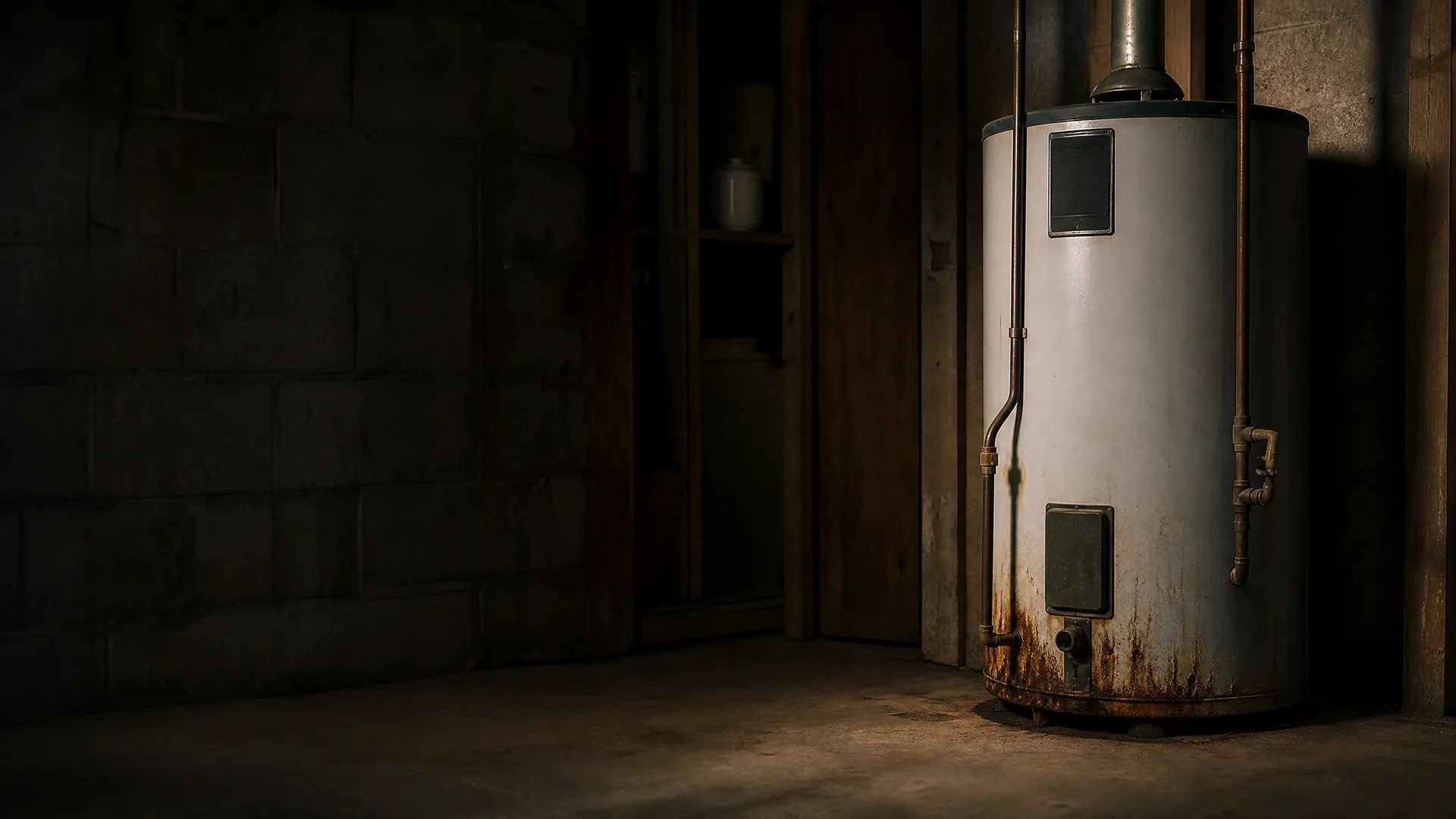
A rusting cylindrical water heater with attached pipes and flue stands in a dim basement corner beside a concrete block wall and a wooden door.

You go down to the utility room after dinner to grab detergent, and the floor by the water heater is damp. It's humid out, the kind of evening that makes everything feel a little wet already, so at first you think it's just condensation off the pipe. Then you crouch down and see the rust, streaked down the side of the tank and pooling at the base where the metal has given out. The tank still ticks faintly as the element cycles. You stand there a second, deciding whether this is a towel-and-wait problem or a tonight problem, already knowing which one it is.
64.7% of homes statewide heat with electricity

Most houses on your street run on electricity, not gas, which is exactly what your water heater was built to use. A tank water heater plugs straight into that electric setup already in your walls, no gas line to add and no panel work to plan for before installation.

ACS 2020-2024 5-year B25040

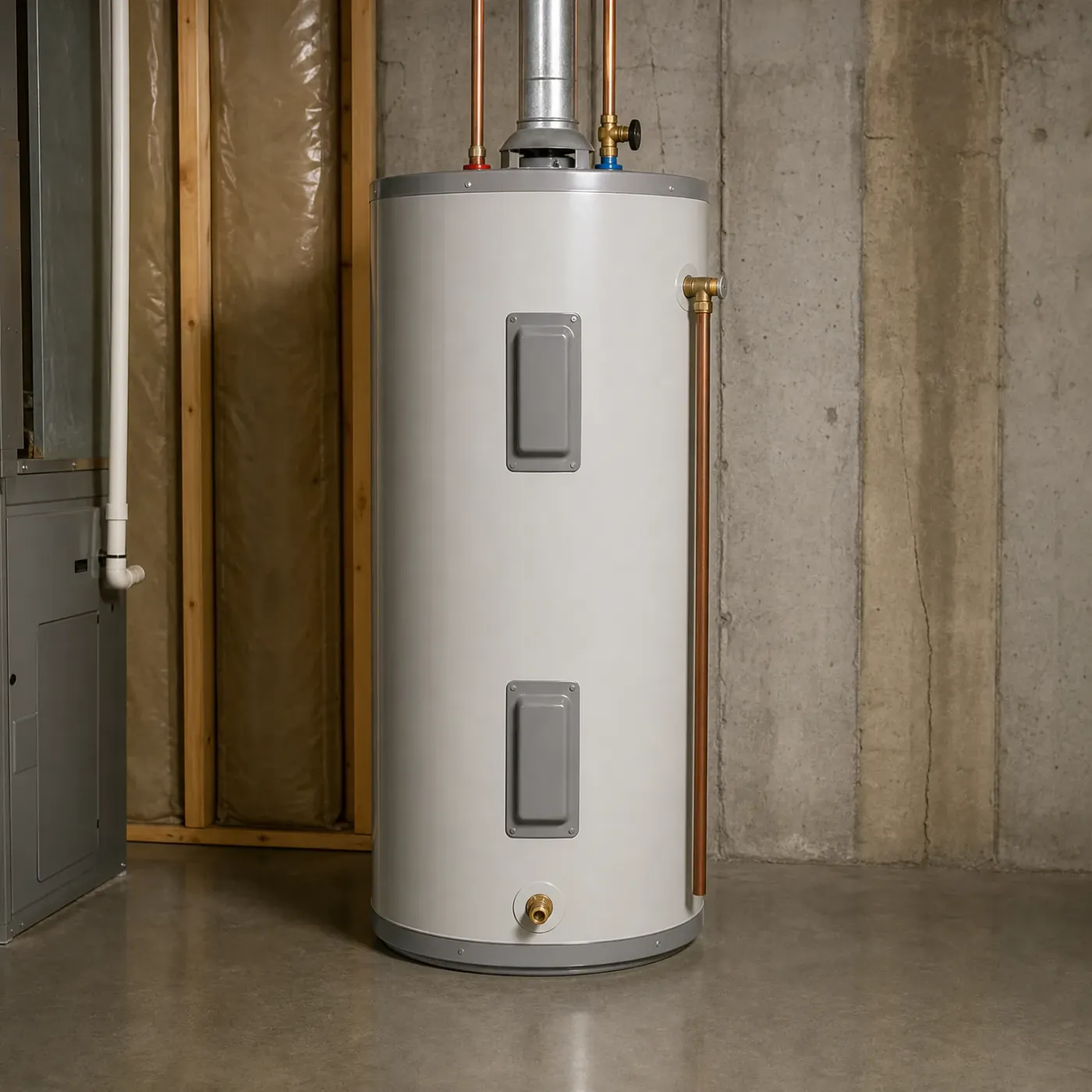
A white cylindrical water heater with two access panels, copper supply pipes and a metal flue, standing on a concrete floor against a concrete wall beside insulated wood framing and a gray electrical panel.

A tank doing its job

This is what a working electric tank looks like, copper lines in, flue vent up top, thermostat panels on the front holding steady. Nothing about it needs attention. It heats a reserve of water, holds it ready, and recovers on its own schedule between uses.

An aging cream-colored water heater with rust streaks and two access panels stands on a concrete floor against a concrete block basement wall, with copper and black pipes running up to the ceiling and a metal duct at left.

A tank on its way out

Rust working across the jacket like this isn't cosmetic. It means water has gotten where it shouldn't, usually from the inside out, and the tank underneath is thinning. Once rust shows on the outside, replacement is closer than repair, whatever type you choose next.

A closed silver laptop and a ceramic mug of dark coffee sit on a wooden table in front of two chair backs, with a kitchen counter, tiled backsplash, wooden cutting boards, a vase of greenery and a potted plant by a window behind.

A tank fits most homes here

For most houses in Louisiana, a tank is the right call. The electric setup already in your walls is built for it, the running cost is lower, and the recovery time is something you plan around rather than fight. Tankless has its place, but it asks for a dedicated circuit and higher electric bills to get the speed it promises.

Once you know which one fits your house, the next step is finding a licensed contractor who installs it right. That usually means searching around, calling a few places, explaining what you need more than once, then sitting with quotes trying to tell them apart. Send the form and that part is off your plate. Someone qualified takes it from there.

Interior corner of a room with a window and sheer curtain at left, a gray upholstered sofa with a cushion at right, and a round wooden table holding stacked books and a round vase with an olive branch.
A single-story stucco house at dusk with a lit paver walkway lined by low path lights, desert plants and boulders in front, and distant mountains under an orange and blue sky.

Water Heater Installation

Finding a pro stops being your job

Step 1 of 3: Equipment
  • A multi-pane white window looking out on snow-covered evergreen and bare trees, with a ceramic mug, pine cones, a book, a knit blanket and a burlap cushion in the foreground.
    • A local installer who puts in water heaters gets your project.
    • Get in touch with a local installer about a new water heater.
  • A cream knit throw and striped pillow on a light upholstered sofa beside a window, with a woven basket of split firewood in the foreground.
    • Send the form and the search for an installer is over.
    • After this form, you can stop searching for a water heater pro.
  • A weathered wooden bench with a beige cushion and a fringed brown throw sits on a wood-plank porch beside a large planter with a thin-branched shrub, against a light-colored house wall with a dark-framed window.
    • Fill out one short form instead of calling around.
    • Explain the job once and skip repeating it on every call.
  • Exterior of a dark shingle-sided house with a white-trimmed divided-light window, a yellow-leaved tree, trimmed shrubs, and two small pumpkins on a stone pillar cap.
    • One installer gets your project, so there's no bidding war over it.
    • Only one pro gets your request, so you hear from one company.