
Water heater leaking in Baton Rouge, LA

Get matched with a pro who fixes water heaters in East Baton Rouge Parish.

Get matched

Why is my water heater leaking?

A puddle under the tank or a drip you noticed near the water heater is never something to leave alone. Before you worry about how bad it is, it helps to know where leaks usually start and whether this is a quick fix or a sign the tank itself is failing. Most leaks trace back to one of a handful of spots.

It's usually a fitting, a valve, or the tank itself giving out

Water collecting around the base often comes from a loose fitting, a bad drain valve, or the pressure relief valve doing its job because pressure inside the tank is too high. Those are fixable without replacing anything. A leak coming from the tank itself, from rust or a crack in the steel, means the tank is failing and won't stop on its own. With summers running long and muggy in Baton Rouge, water heaters here often run harder for more of the year, which adds wear to tanks already near the end of their life. A plumber can pressure test the valve and check the tank to tell you which one you're dealing with.

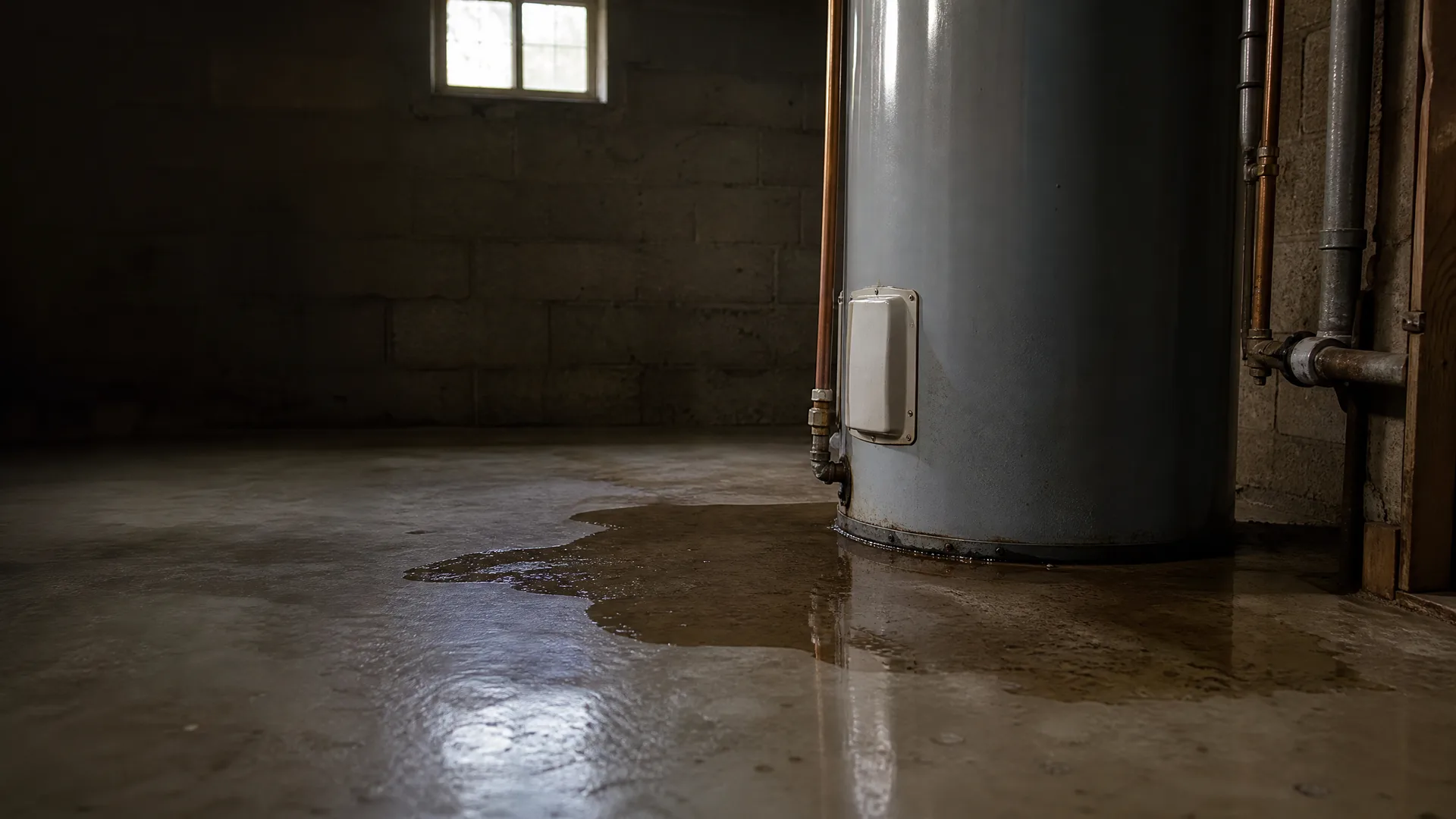
A gray cylindrical water heater stands in a dim basement with concrete block walls, copper and metal pipes along the wall, and a pool of water spreading across the concrete floor.

Most houses in East Baton Rouge Parish don't have basements, but yours does, and that's where the water heater sits. It's Saturday morning and you go down to grab something from the shelf by the stairs and your sock lands in water before you see it. The puddle has already spread a couple of feet out from the base of the tank, catching the light from the small window. You crouch down and look at the bottom seam, trying to find where it's coming from. The tank hums along like nothing is wrong. You stand there a second, sock soaked, deciding what to shut off first.

What does your household depend on when the water heater's out?

  • 2.47 people per household on average

    With 2.47 people in the average household here, hot water gets used by more than one person a day, so a leaking tank affects the whole house, not just one shower.

  • Half the homes here were built by 1984

    Half the homes in the parish were built in 1984 or earlier. If yours is one of them, the water heater may not be original, but the pipes and connections around it are older too.

  • 64.7% of homes heat with electricity

    64.7% of homes here heat with electricity, more than any other fuel. If yours is electric, a leak near the base can mean water reaching the power connection, which is a reason to shut it off rather than wait.

ACS 2020-2024

The tank is actually cracked

A cracked or rusted-through tank means the water heater is done. Once the steel has corroded enough to let water through, no repair holds, because the weak spot is in the metal itself and more of it is failing the same way nearby. Water usually shows up at the base of the tank, running down the side and pooling underneath. If that's where yours is coming from, the fix is a new water heater, not a patched one. A local contractor can confirm it's the tank itself and not a fitting before you replace anything.


It's a fitting or valve

Plenty of leaks have nothing to do with the tank. The drain valve at the bottom, the T&P valve on top, a loose inlet or outlet connection, even the flex lines running to it, these can all drip or weep without the tank being the problem. These parts are made to be swapped out on their own. A contractor who works on water heaters regularly can usually tell within a few minutes which part is wet and whether tightening or replacing it stops the leak, often without touching the tank at all.

A gray-haired man in a dark long-sleeve shirt sits on a gray sofa in a living room, looking toward a sunlit window with sheer curtains.
A gray-haired man in a dark green sweatshirt sits on a sofa in a living room, looking toward a bright window, with a houseplant, lamp, fireplace and framed art behind him.
A gray-haired bearded man in a dark green collared sweater sits on a sofa in a living room with a window, houseplant, floor lamp and bookshelves, looking off to the side.
A gray-haired man in a dark green sweater sits on a sofa in a sunlit living room, looking off to the side, with a framed landscape painting, dining table and shelving behind him.

Where the water is actually coming from

  • Water pooling at the base can come from the drain valve, a loose fitting, or the tank itself, and each points to a different fix.
  • The temperature and pressure relief valve sits near the top and opens on its own when pressure inside the tank climbs too high.
  • A leak from that relief valve usually means the thermostat is overheating the water, not that the valve itself is broken.
  • Condensation on a gas water heater's flue can drip down the side of the tank and look like a leak from the top.
  • Fittings and unions where the hot and cold lines connect loosen slightly over years of heating and cooling, and that's often where the first drip starts.
  • A leak at the bottom seam of the tank means the steel has corroded through, and no fitting or valve repair stops that.

A water heater has a handful of places water can get out, and each one tells you something different. Start low. The drain valve near the bottom is plastic or brass and it's used so rarely that a slow weep there can go unnoticed for weeks. Fittings where the hot and cold lines thread into the top of the tank are next, and those connections can loosen a little as the metal heats and cools over and over. Neither of those means the tank is bad. Higher up, the temperature and pressure relief valve is doing its job if it opens, since it's built to release water the moment pressure inside climbs past what's safe. If it's letting go often, the real problem is usually a thermostat running the water hotter than it should, not a faulty valve. On a gas unit, check the flue before you assume the worst. Flue gas carries moisture, and that moisture can condense on the cool metal and run down the outside of the tank, which looks exactly like a leak but isn't one. The one spot that doesn't get better on its own is the bottom seam or the tank wall itself. Steel corrodes from the inside out, and once it's let water through, that's a sign of failure in the metal, not a part that can be swapped out.

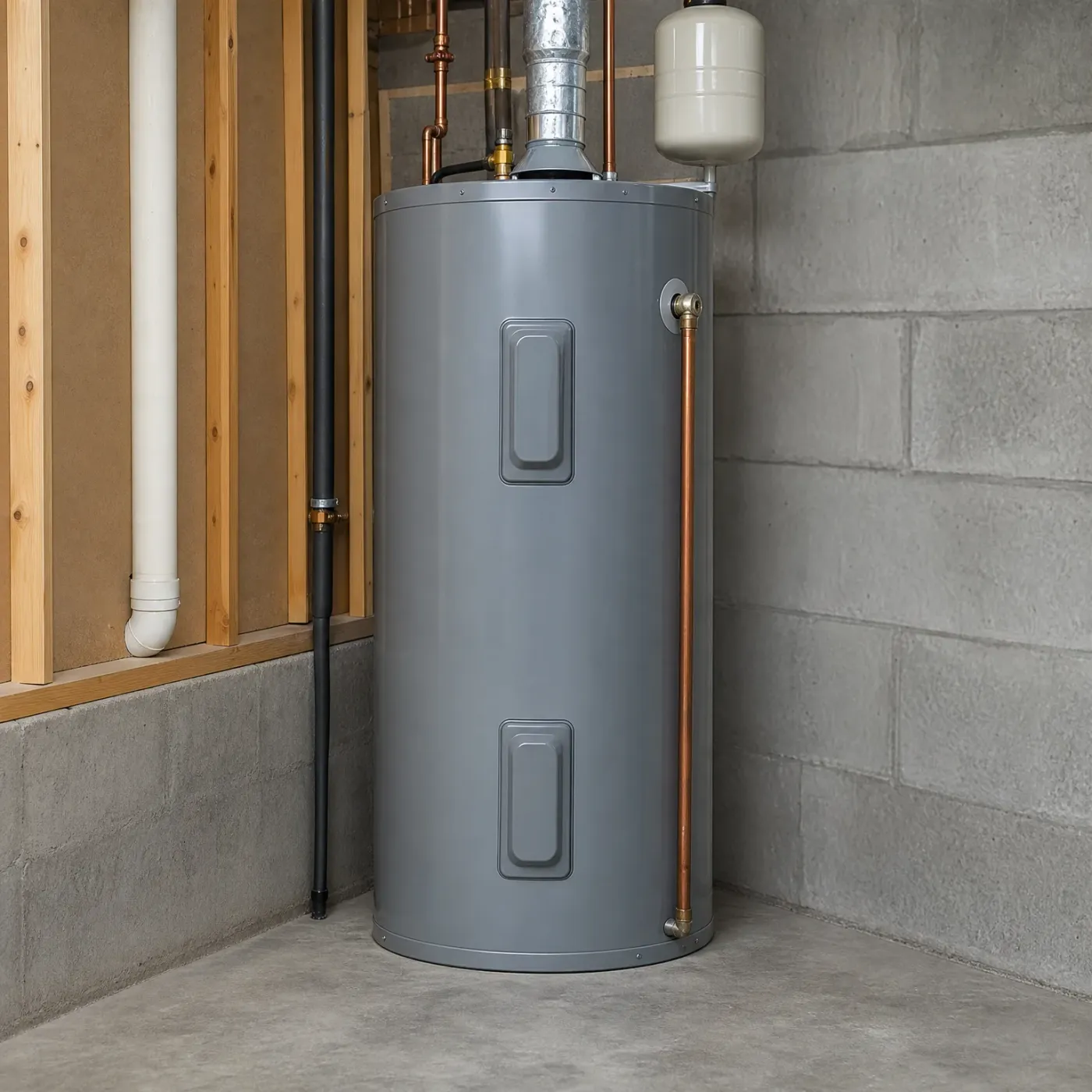
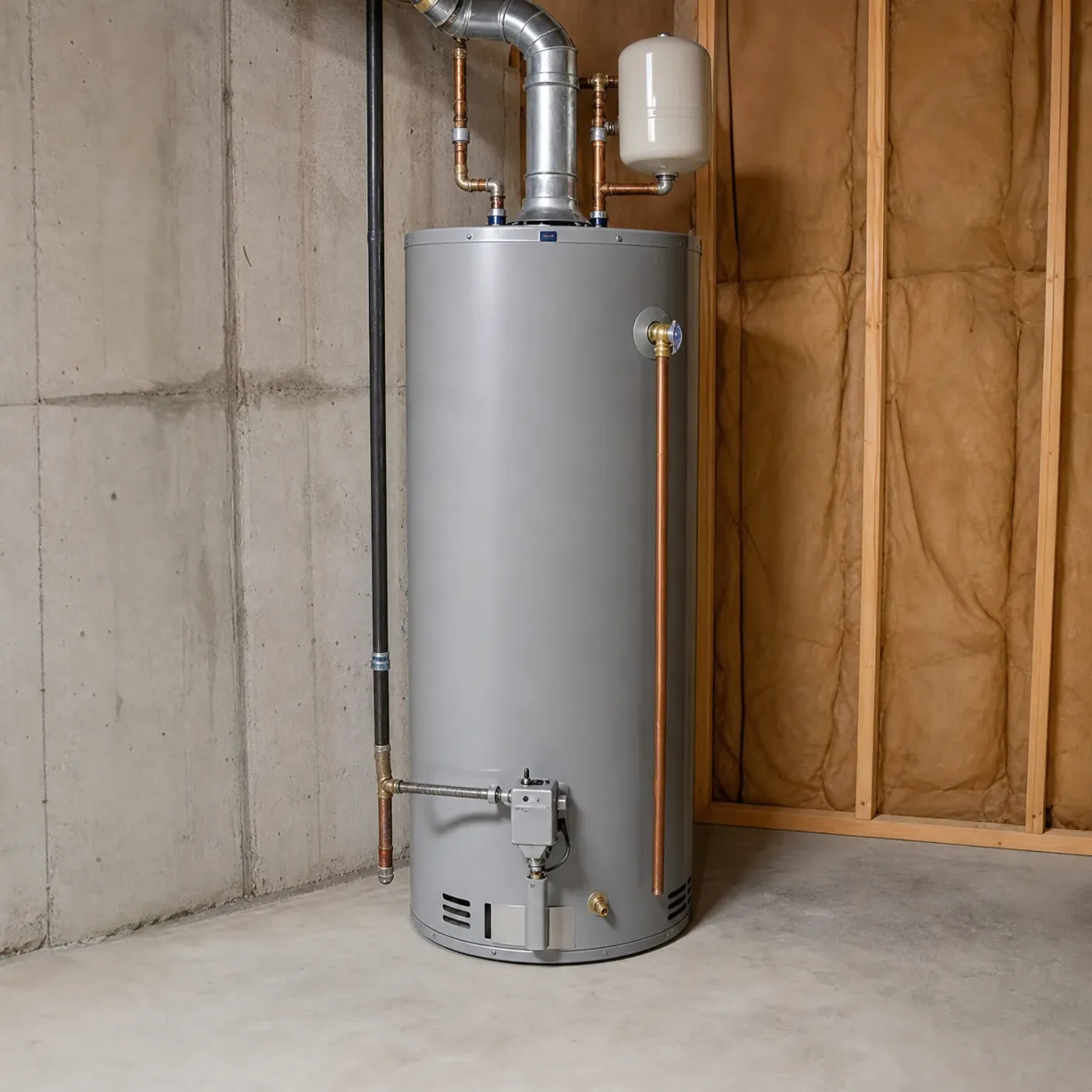
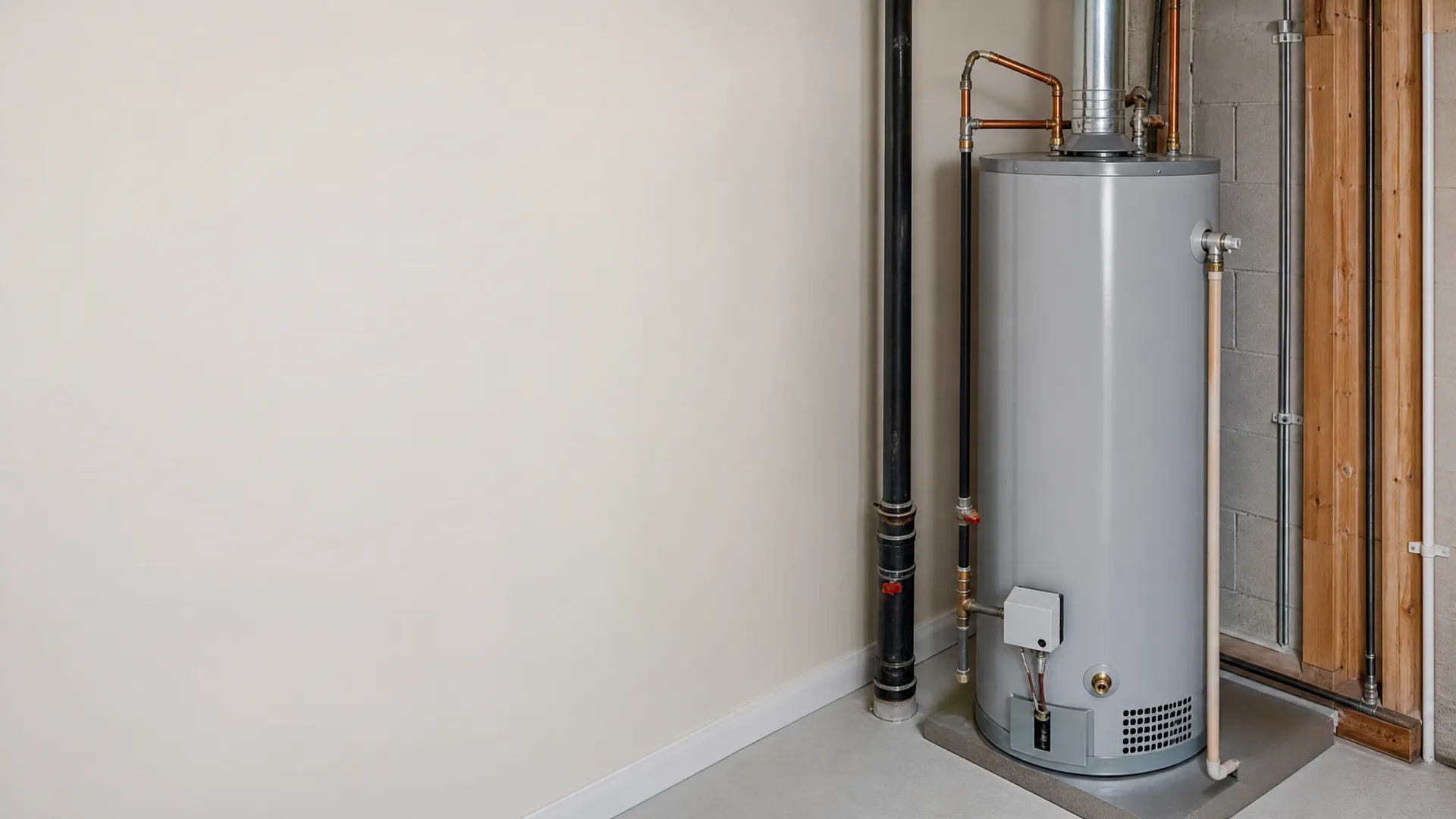
A gray cylindrical water heater with copper piping and an expansion tank stands in a basement corner beside a concrete block wall and exposed wood framing.
This is a water heater doing its job, copper lines tight and dry and nothing pooling underneath it.
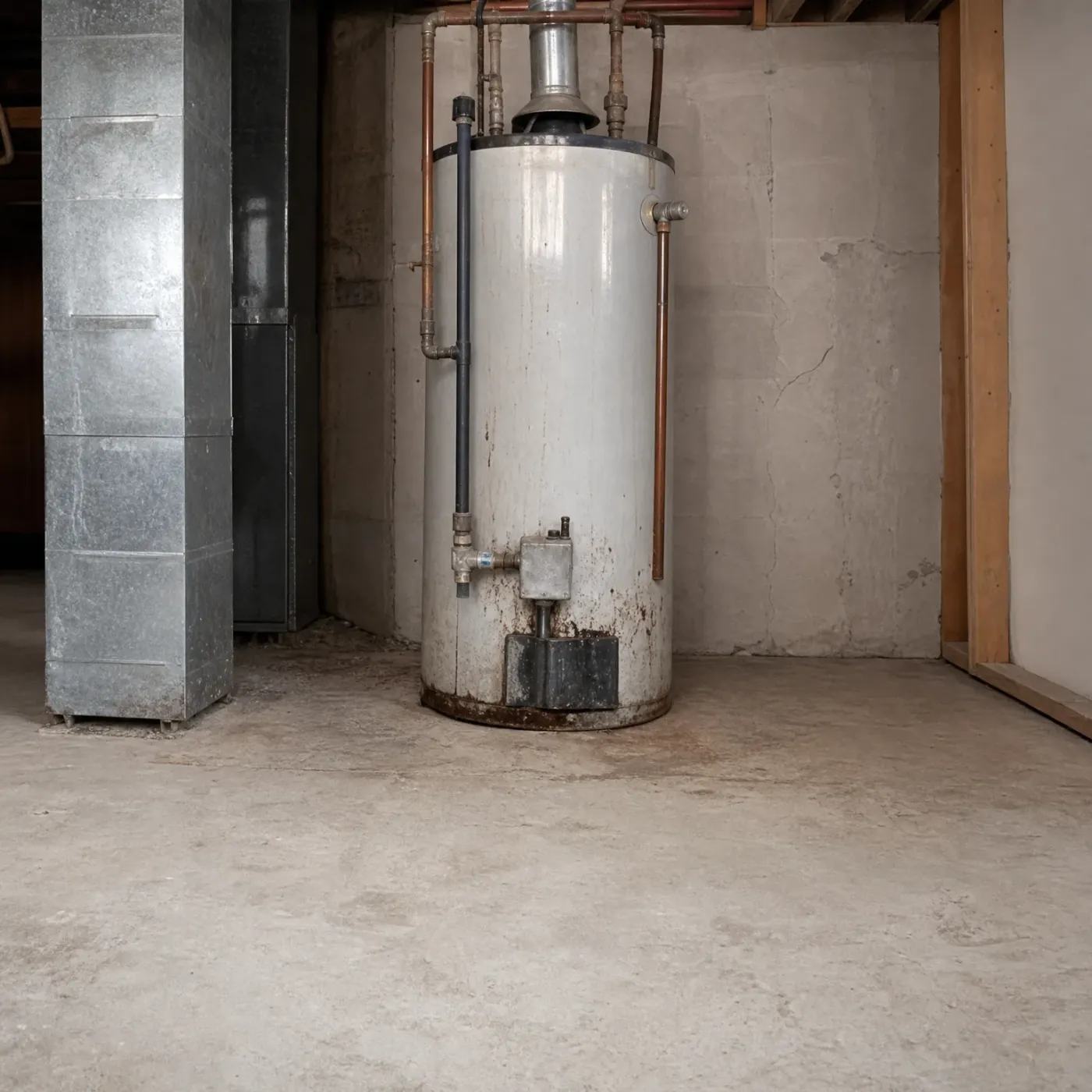
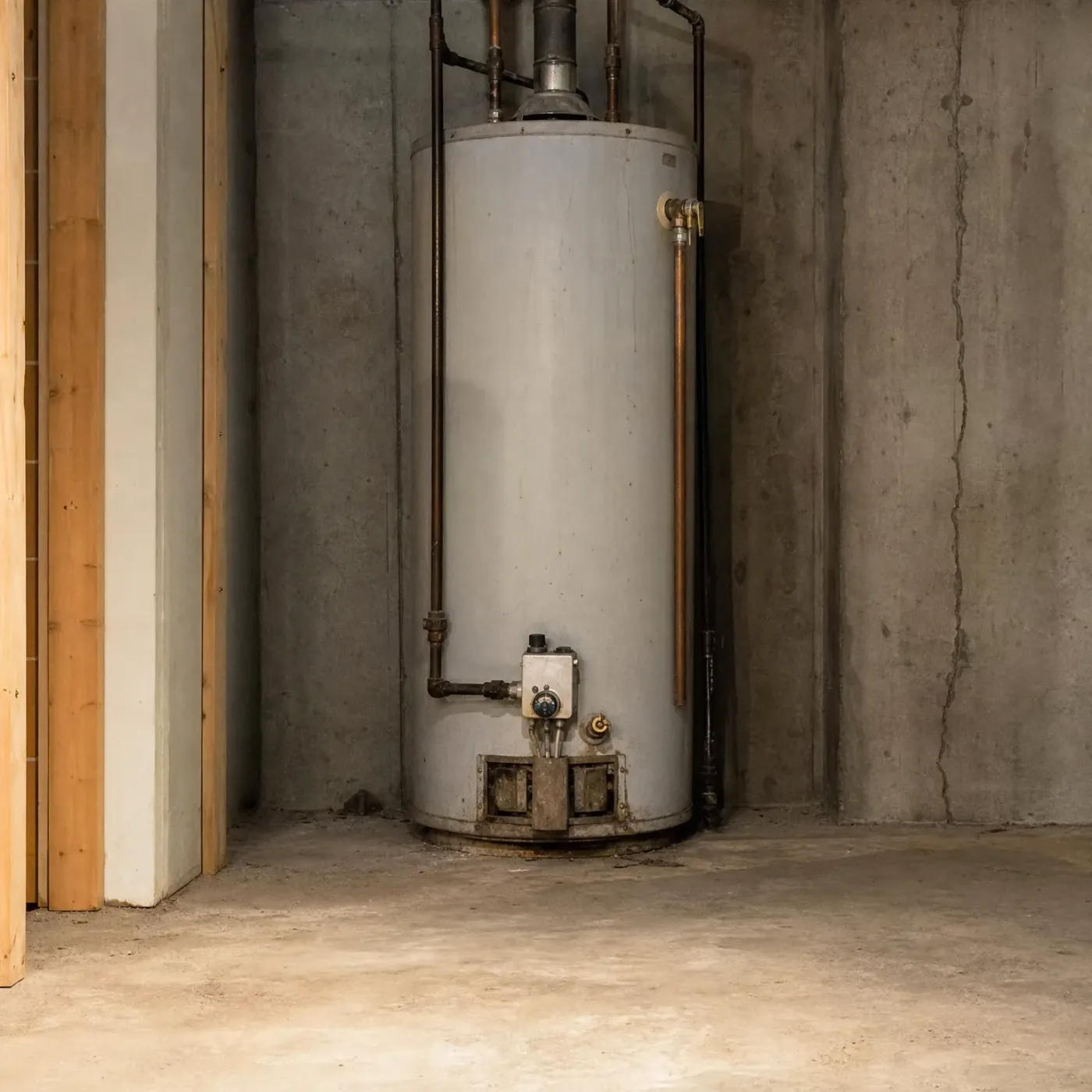
An old rusting cylindrical gas water heater with copper and steel pipes and a flue stands against a concrete basement wall beside metal ductwork on a bare concrete floor.
This one has been rusting for years, and the scale and corrosion mean a leak here won't be a one-time fix.

Power here costs 12.50 cents per kilowatt-hour

At 12.50 cents per kilowatt-hour, running an electric water heater here costs less than in most places, which is part of why a leak is worth fixing rather than living with. Replacing a tank that's still cheap to run usually makes more sense than replacing one that's also driving up your bill.

EIA-861 2025

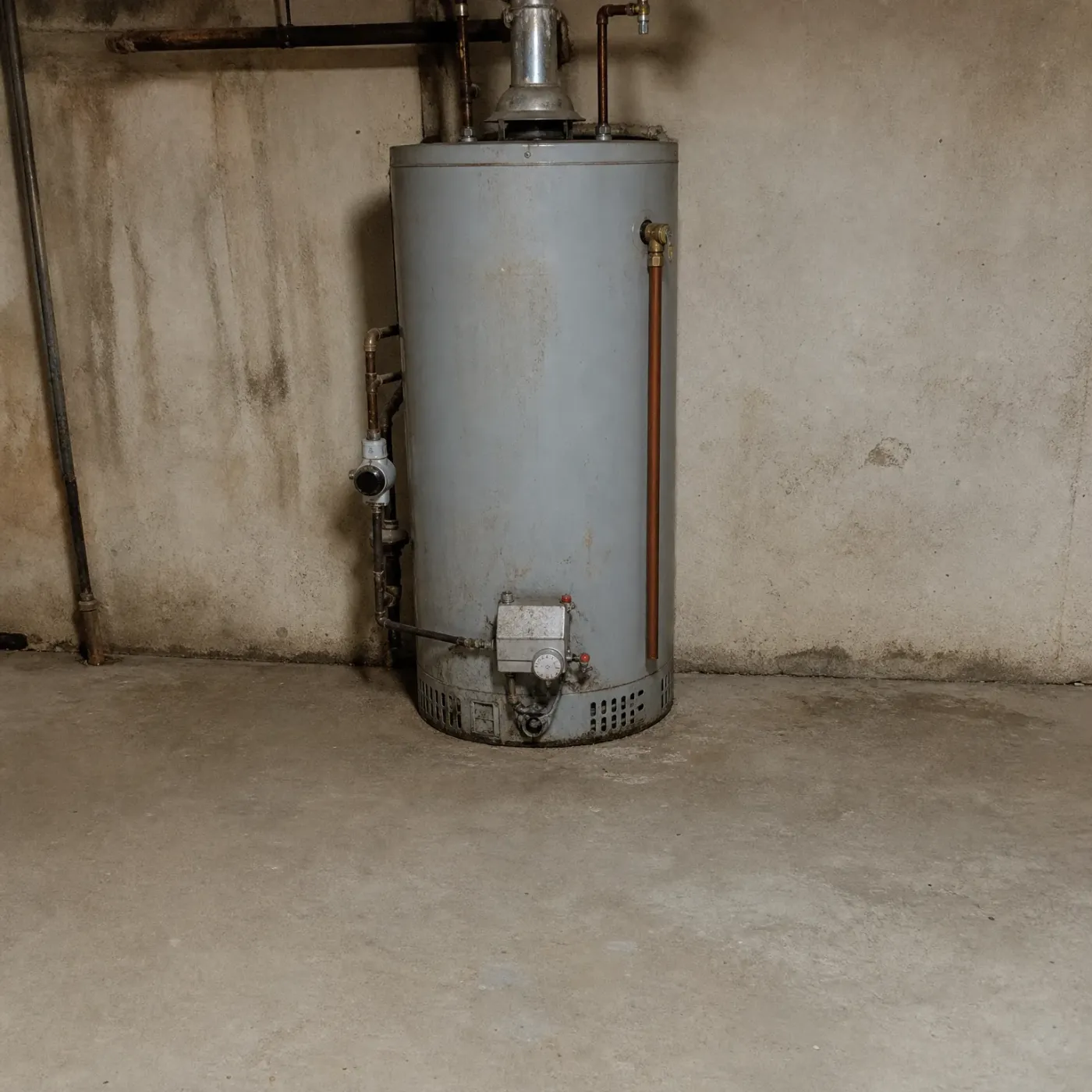
An older gray cylindrical gas water heater with copper and steel piping and a flue, standing on a concrete floor against a stained concrete wall.
Before you get your water heater repair
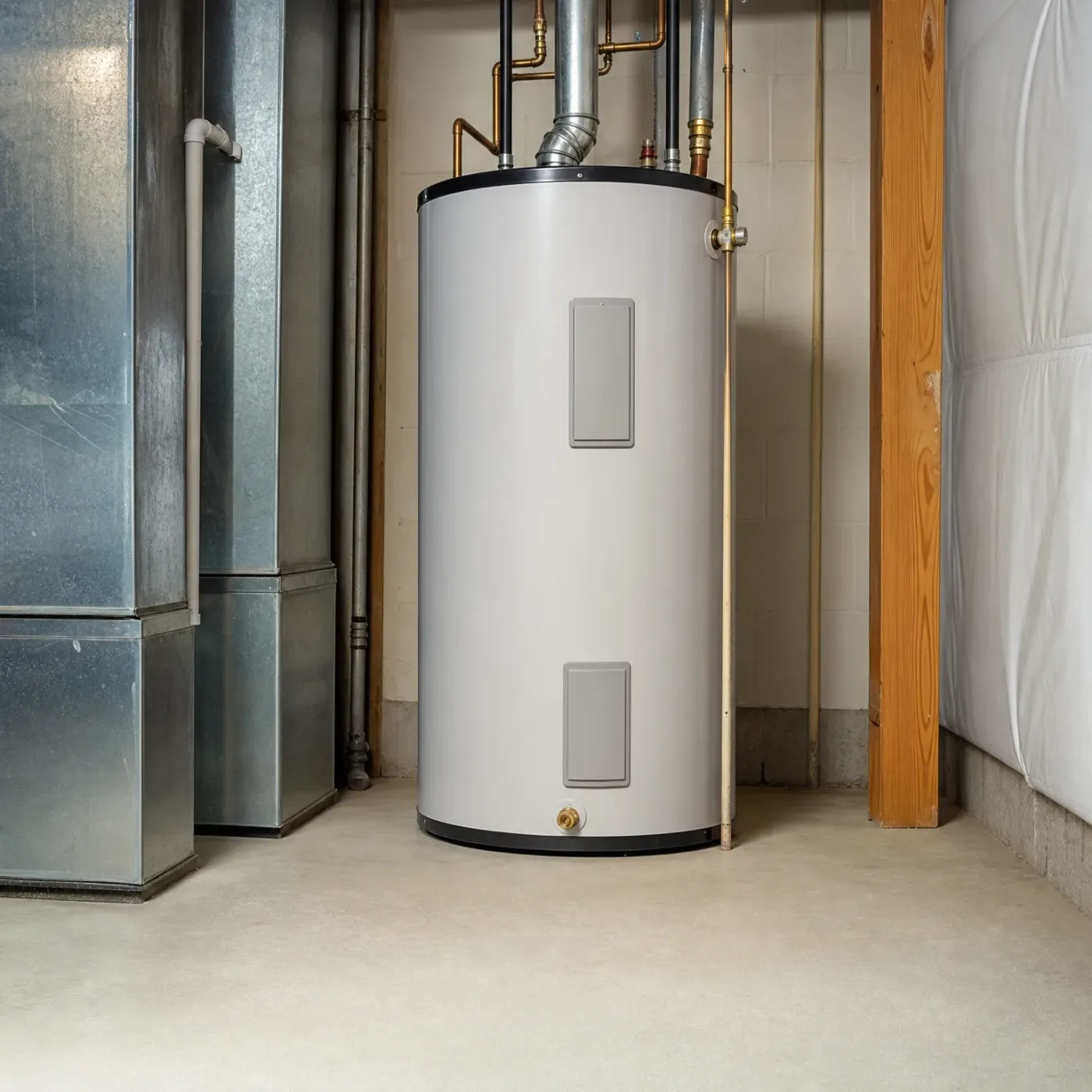
A white cylindrical water heater with two access panels stands on a concrete floor in a basement corner, beside galvanized ductwork, copper and metal pipes, a wooden post, and a concrete block wall.
After you get your water heater repair
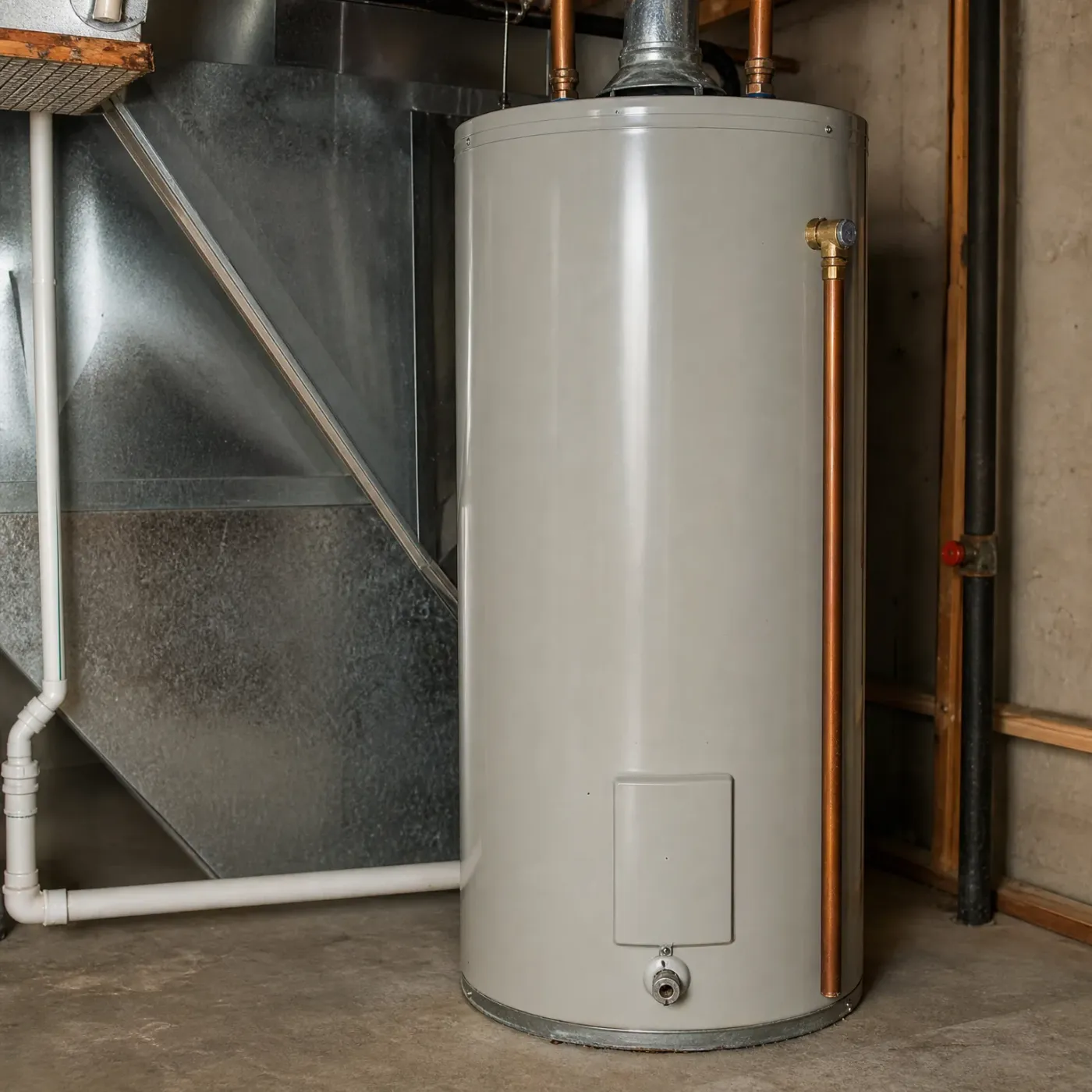
A beige cylindrical water heater with copper pipes and a brass valve stands on a concrete floor in a basement beside galvanized ductwork, white PVC piping, and a black vertical pipe along a concrete wall.

Get matched with a water heater pro in East Baton Rouge Parish

The pro who gets in touch is licensed in Louisiana and works in East Baton Rouge Parish.

Get matched with a pro who works on water heaters in East Baton Rouge Parish.

Get a licensed local pro

There's no charge for the request.

What are you seeing near your water heater right now

Look for water on the floor around the base, a damp spot on the wall behind it, or drips coming from a fitting or the bottom of the tank. You might notice a musty smell before you see anything, especially if the water heater sits in a closet or a basement where the air doesn't move much. Rust-colored water is worth noting too. If the leak has been going a while, check for soft or discolored flooring, swollen baseboards, or a sagging spot in the ceiling below if the unit is upstairs. Left alone, that moisture works into wood and drywall and invites mold, and it won't stop on its own.

A gray cylindrical gas water heater with copper piping, flue vent, and a small expansion tank stands in a basement corner between a concrete wall and an insulated stud wall.

Working the way it should

A water heater in good shape has dry connections and a tank that isn't sweating. The copper lines stay tight, the flue vent sits clear, and there's nothing collecting on the floor underneath. That's what you want to see when you check on it.

An older gas water heater with copper and black pipes stands in the corner of a bare concrete basement next to a wood-framed partition wall.

Years of wear catching up

An older tank in the corner of the basement tells a different story. Rust builds along the seams, the gas control valve shows its age, and a leak at this stage usually means the tank itself is failing, not just a loose fitting somewhere on the line.

Repair the Leak or Replace the Tank

Repair

  • A contractor can replace a drain valve, tighten a fitting, or swap out a failed T&P valve without touching the tank itself.
  • If the leak is from a connection or a part, the tank underneath can still be sound and good for years of use.
  • A repair usually means less disruption, since the existing tank stays in place and the water heater is back in service sooner.
  • If your water heater is still relatively young, repairing a failed part makes more sense than replacing a tank that has plenty of life left.
  • A leak caught early, before it reaches the steel of the tank, is often the cheaper and simpler problem to solve.

Replace

  • Once the tank itself is cracked or rusted through, no repair holds, because the failure is in the metal and spreading.
  • A tank that's been corroding for years often has scale buildup and weak spots in more than one place, not just where it's leaking now.
  • Replacing an old tank means a new one with no hidden rust or wear working against it from day one.
  • If the leak is coming from the bottom of the tank rather than a fitting or valve, that's almost always a sign it needs to go.
  • A new water heater means you're not stuck guessing which part might fail next on a unit that's already shown its age.
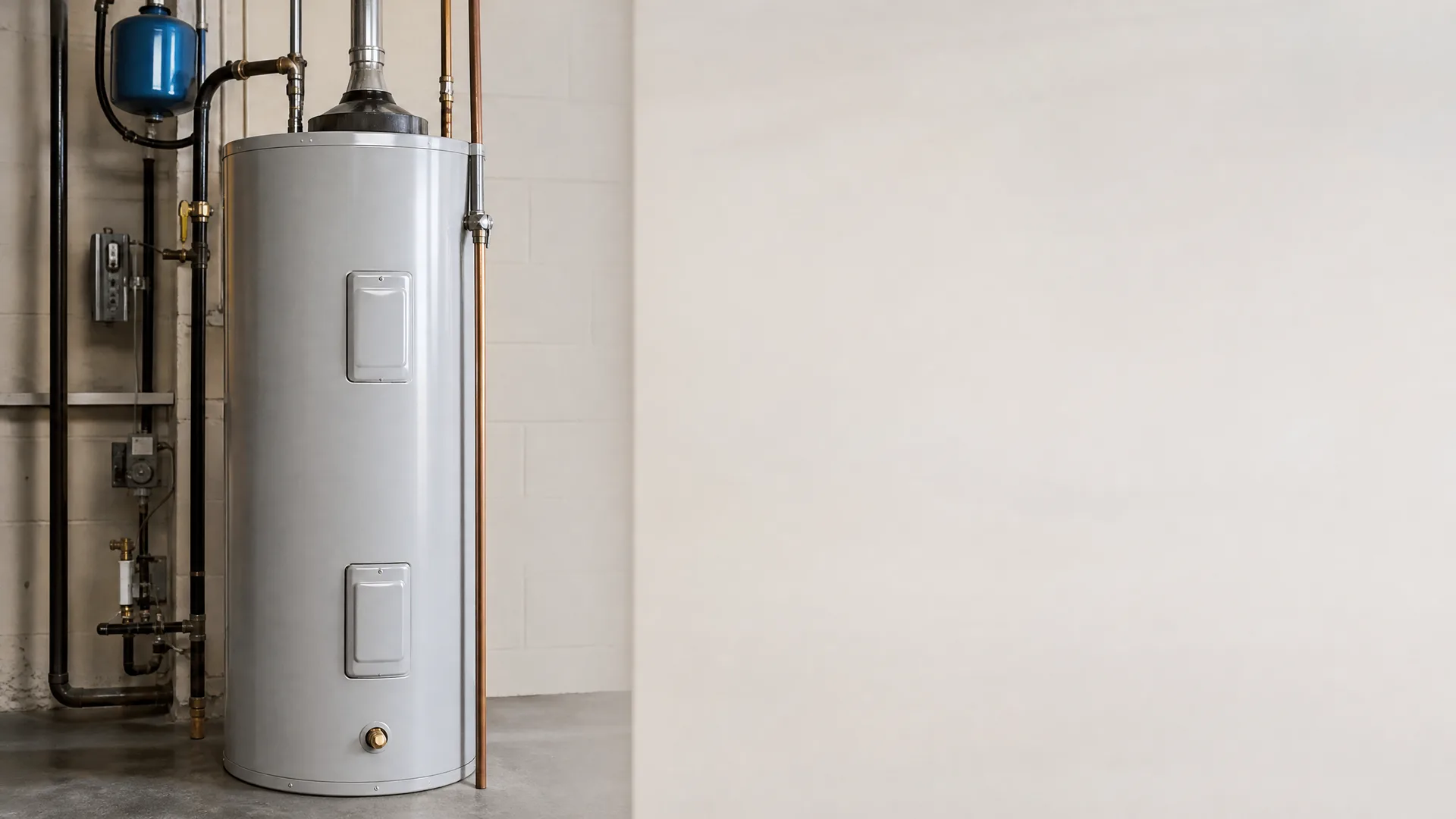
A gray cylindrical water heater with two access panels stands on a concrete floor beside copper and black pipes, a blue expansion tank, and an electrical box against a light wall.

Catching it early

A leak you catch the first day it shows up is usually still just a loose fitting or a worn valve. The floor around the tank is only damp, not soaked, and nothing underneath has had time to rust or swell. A contractor can get to the actual part, tighten it or replace it, and be done without ever needing to touch the tank. The electric bill hasn't climbed from a system working harder than it should, and nothing around the water heater has started to warp or stain from standing water.

A gray gas water heater with copper and black pipes and a metal flue stands in the corner of a room with a beige wall, concrete block wall, and wood studs.

Letting it sit for weeks

A leak left alone doesn't stay small. The water finds the subfloor, the wall behind the tank, or whatever shelving is nearby in the basement, and by the time anyone calls, there's wood to deal with along with the water heater itself. Rust that started at one seam spreads to the metal around it, and what would have been a valve swap becomes a full tank replacement. The parish's humidity doesn't help wet wood dry out fast either, so the damage keeps compounding the longer the drip runs unchecked.

A leak near your water heater almost always comes down to one of three things: a fitting, a valve, or the tank itself, and the difference between them decides whether this is a quick fix or a replacement. A contractor who works on these tanks all over East Baton Rouge Parish has seen that difference enough times to spot it fast, usually within minutes of looking at where the water is coming from and how the metal around it looks. That's the value of getting matched with one licensed local contractor instead of guessing on your own or fielding calls from several companies at once. You'll hear from someone who actually knows what tends to fail in tanks around here and how to check it properly. Whatever they find, you'll know where you stand and what it takes to get the water heater working right again.

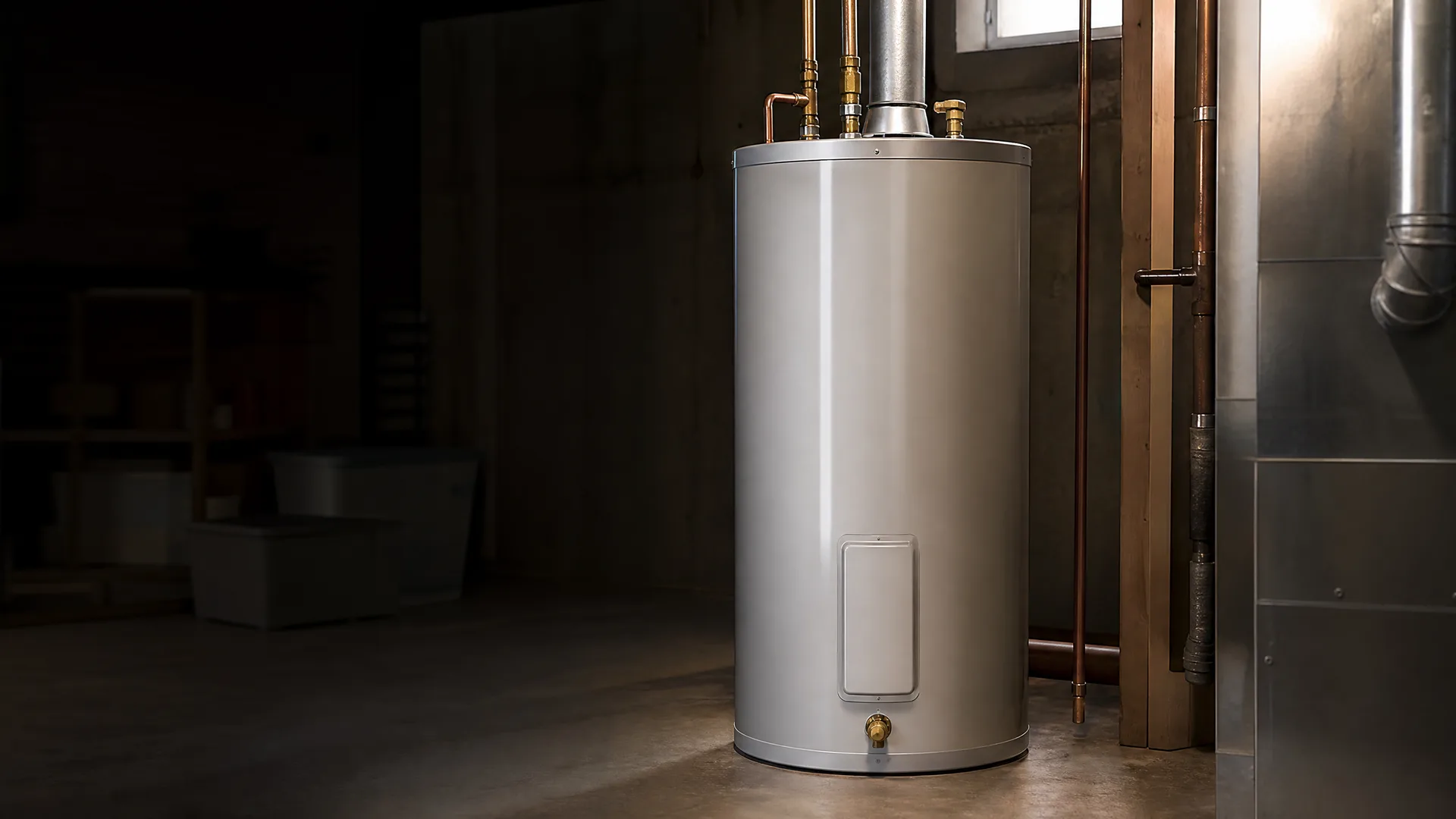
A gray cylindrical water heater with copper pipes and a flue stands on a concrete floor in a dim basement, with metal ductwork and storage bins nearby.

Find a water heater repair pro in East Baton Rouge Parish

Step 1 of 3: Equipment