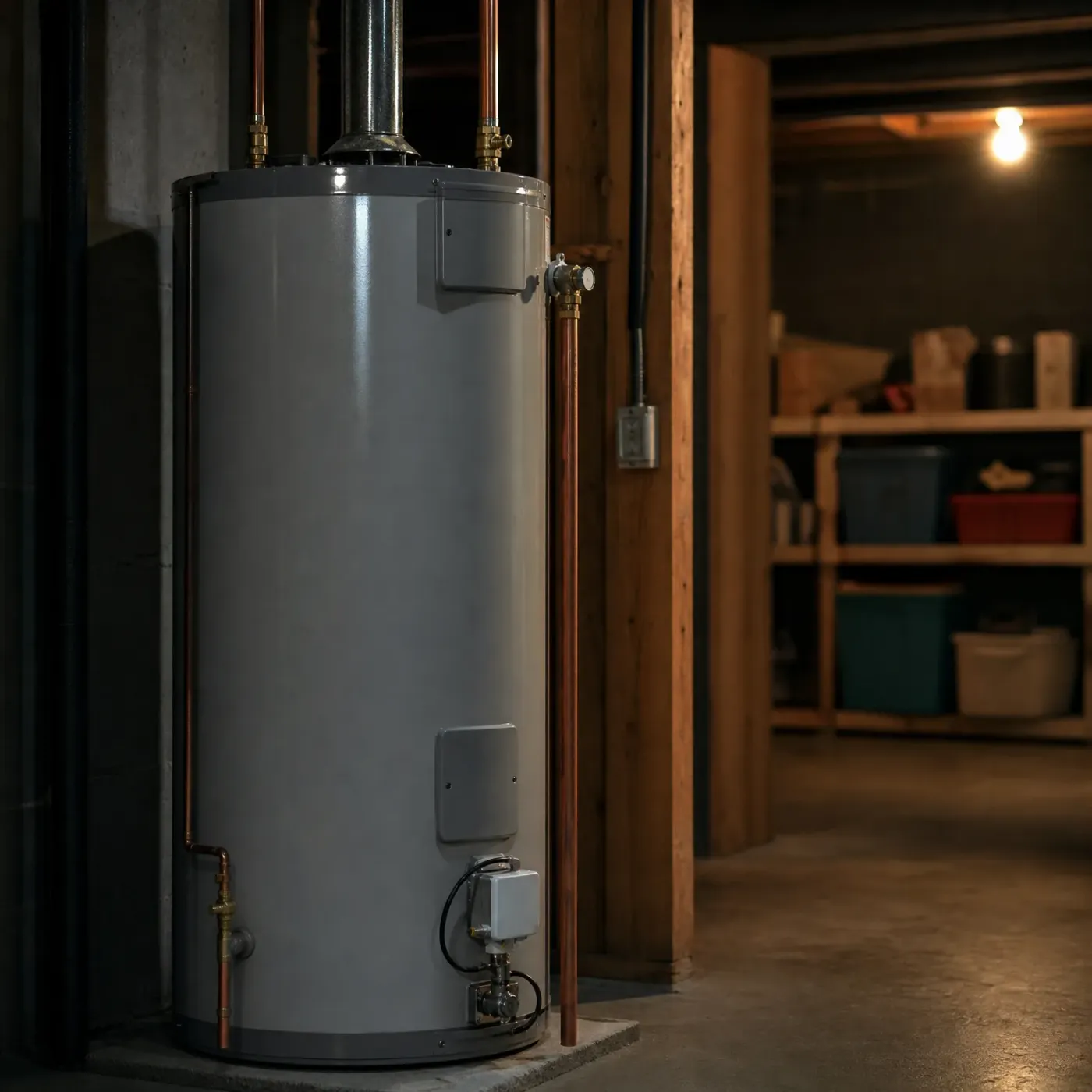
A large gray cylindrical water heater with copper pipes and a metal flue stands on a concrete pad in a dim basement, with wood framing and shelves of storage bins lit by a bare bulb behind it.

A pro who works on water heaters

Why your hot water is lukewarm in Louisiana

Lukewarm water with an electric water heater usually points to one heating element working while the other has failed, or a thermostat that's lost its setting. It can also mean the tank is undersized for what your house asks of it. This page walks through what causes each case and what to check before deciding it needs a repair.

Match me with a pro

Lukewarm water almost always means only one of your two heating elements is working. A water heater has an upper and lower element, and when the lower one fails, the upper one still heats the top of the tank while the rest stays cold. You get a few minutes of warm water, then it fades fast. A bad thermostat can cause the same thing by shutting an element off too soon. Either way, this is not something that clears up on its own. The element has to be tested and replaced, or the thermostat reset and checked, before the tank will heat fully again. With showers running every evening and two people sometimes needing hot water back to back, a half-working tank falls behind fast. The fix is specific to which element failed and how the tank is wired, so it needs a look in person.

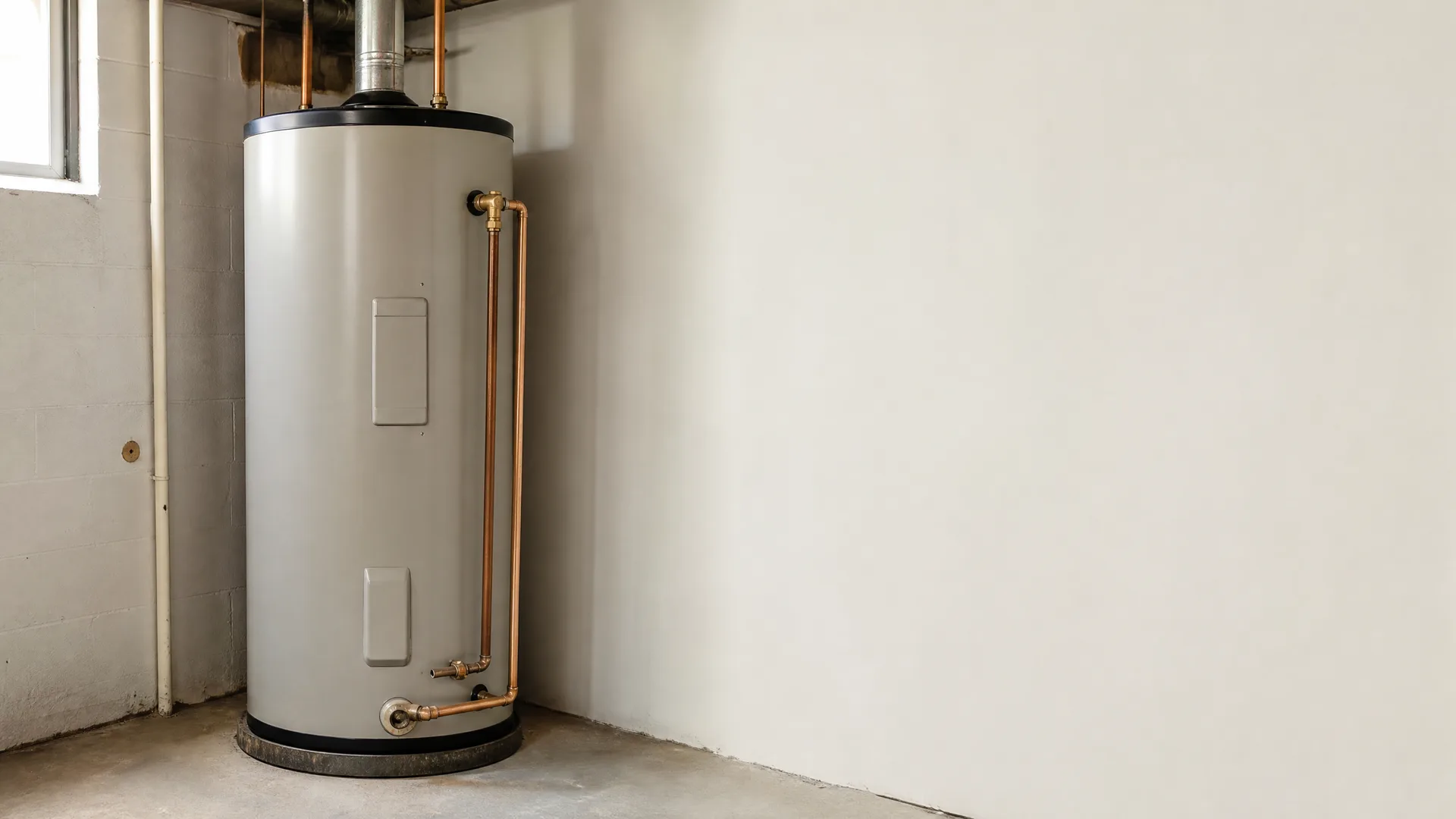
A tall gray cylindrical water heater with copper piping and a flue stands in the corner of an empty basement room with concrete block and painted walls.

Why the elements fail one at a time

The two elements don't share the work evenly. The lower element cycles on more often because it's reheating water as it's drawn from the bottom of the tank, so it wears out first most of the time. When it goes, the thermostat for the upper element still reads satisfied once that top section heats up, so the tank never signals a full failure. It just quietly stops giving you more than a few gallons of hot water.

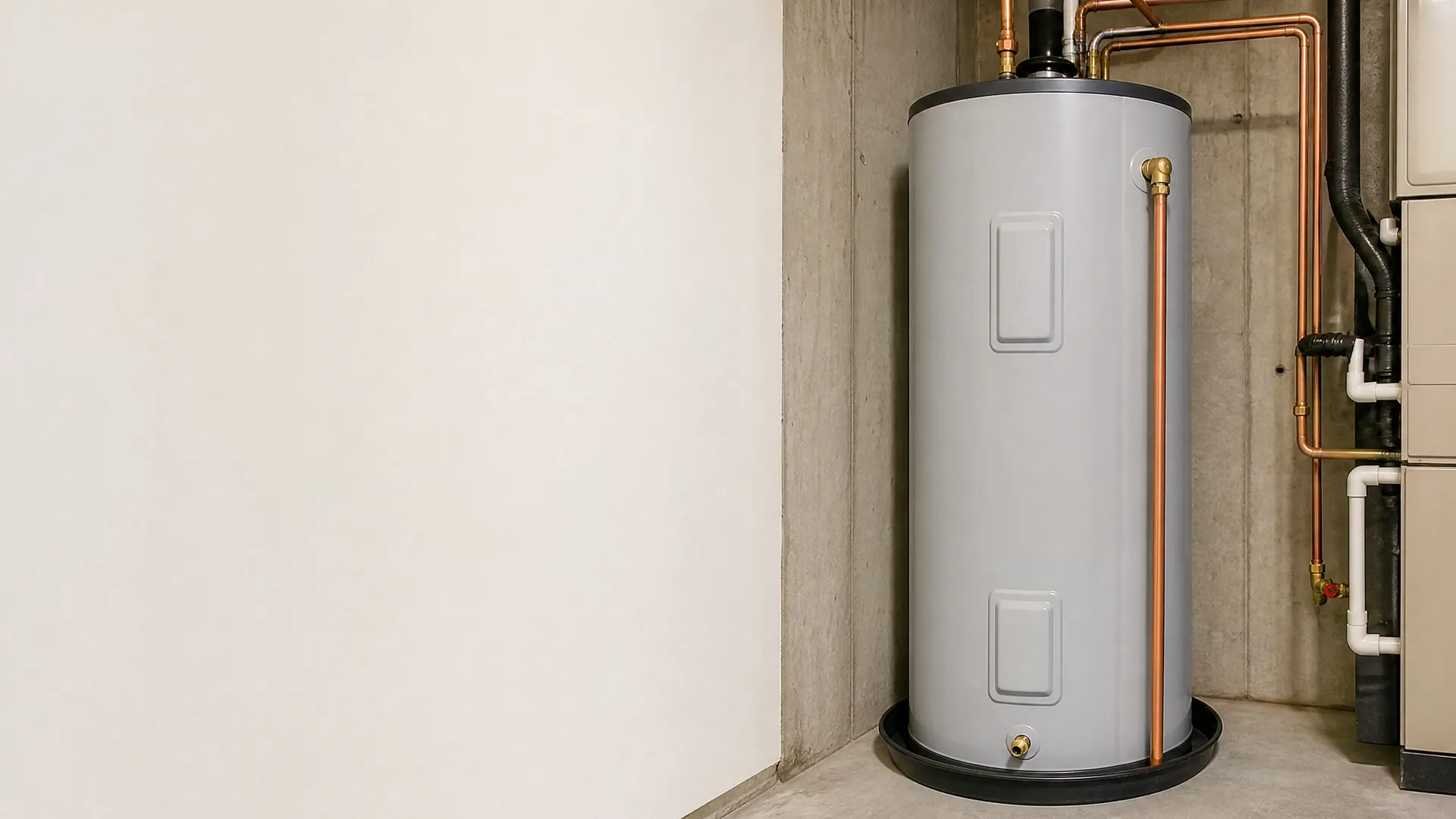
A gray cylindrical water heater stands in a drain pan against a concrete wall, with copper and white pipes running along the wall to the right and a plain light wall on the left.

What a tank size mismatch looks like

If both elements test fine, the tank itself may be too small for how your household uses it. A standard 40 or 50 gallon tank recovers at a fixed rate, and electric elements heat slower than a gas burner would. Running the dishwasher, a shower, and a load of laundry close together can draw down the tank faster than the elements can recover it, so the water coming out reads lukewarm even though nothing has actually failed.

Is your hot water running out faster than it used to?

A shower that used to last might now turn lukewarm halfway through, or the dishwasher gets a cold rinse when it used to run hot the whole cycle. You might notice the water never gets past warm no matter how long you run it, or it starts hot and fades fast. Some households just turn the temperature dial up to compensate, which only pushes more load onto the one element still working and shortens how long it lasts. Left alone, that element eventually fails too, and then there's no hot water at all instead of just not enough.

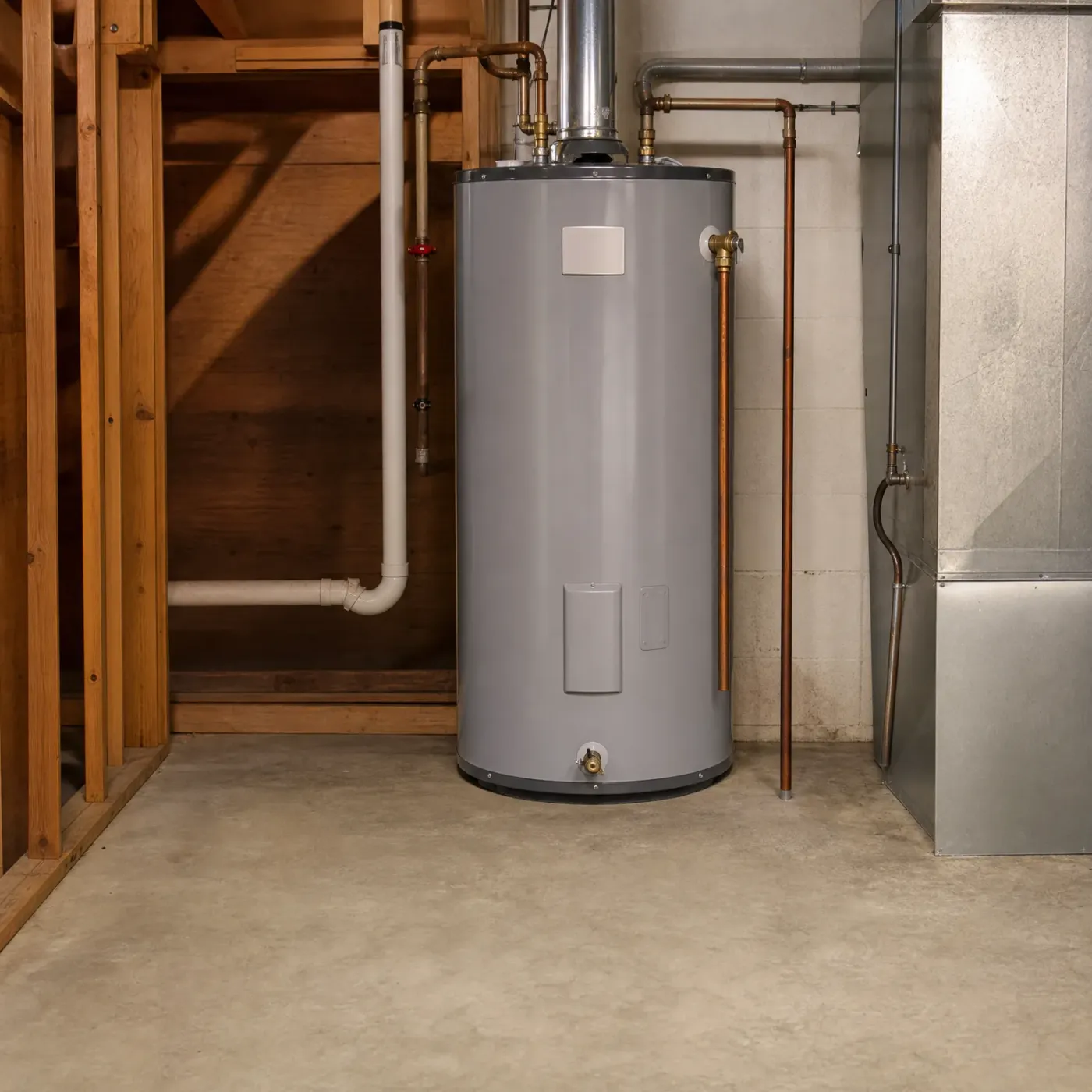
A gray cylindrical water heater stands on a concrete basement floor between an unfinished wood stud wall and a metal furnace duct, with copper and PVC pipes running along the concrete block wall.

A tank that's keeping up

This is what a water heater doing its job looks like, both elements cycling on in turn, the tank holding its temperature until the water runs out, not before. Copper and PVC lines carry the hot water where it needs to go without a fight.
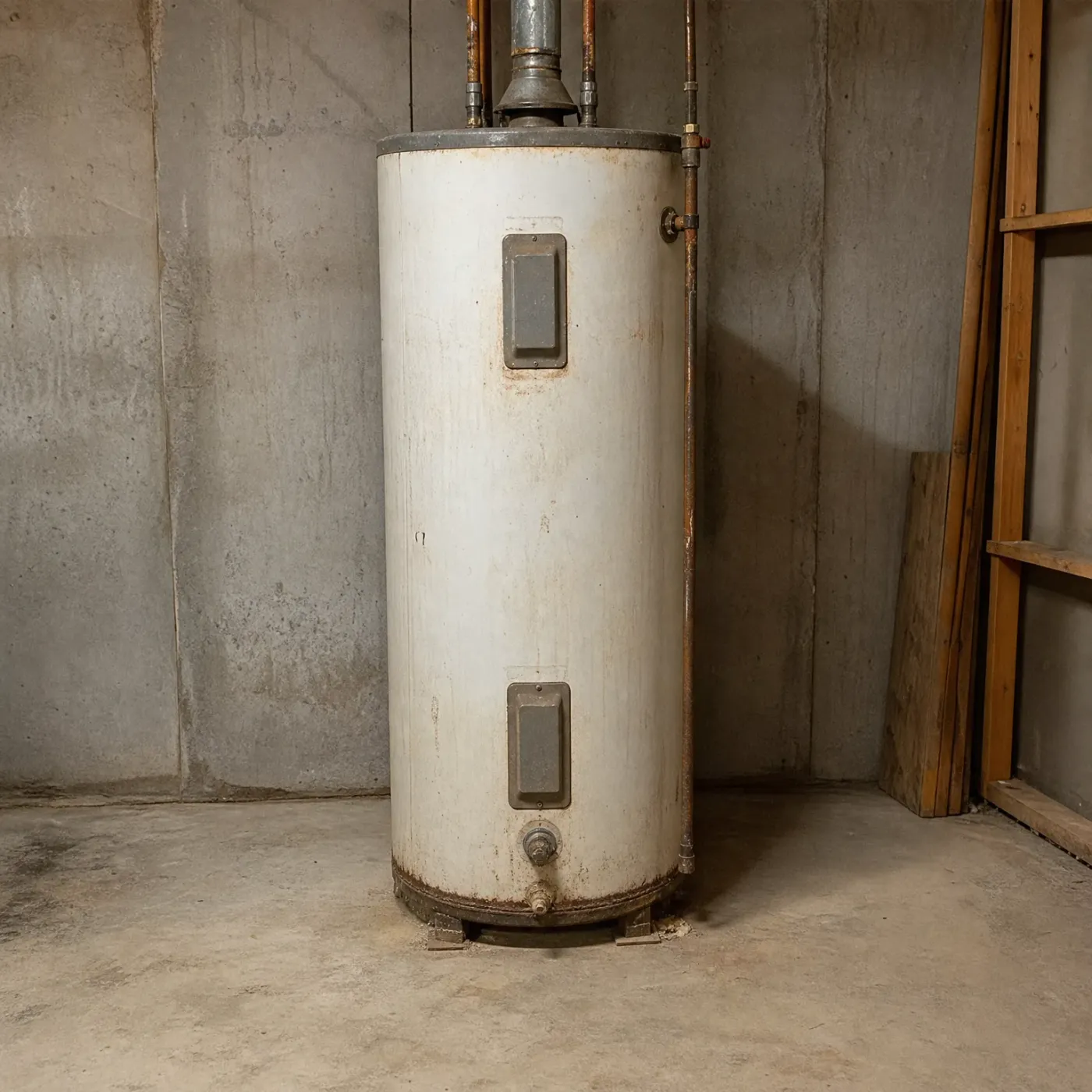

A rusted white cylindrical water heater with two access panels stands in a concrete-walled basement corner, with pipes rising from its top and wooden boards leaning against the wall at right.

A tank past its working life

Rust like this on the tank or around the thermostat panels usually means more than one bad element. Once a tank corrodes this much, a repair might buy a little time, but you're looking at a unit near the end of what it can do.

A smiling bearded man in a navy sweater sits at a candlelit dinner table with a glass of red wine, a bowl of salad, and plates of food in the foreground.
A woman with dark hair in a bun reclines on a sofa with her eyes closed, wrapped in a cream fleece blanket, a closed blue hardcover book resting in front of her, with a lit lamp and a vase of dried flowers in the background.
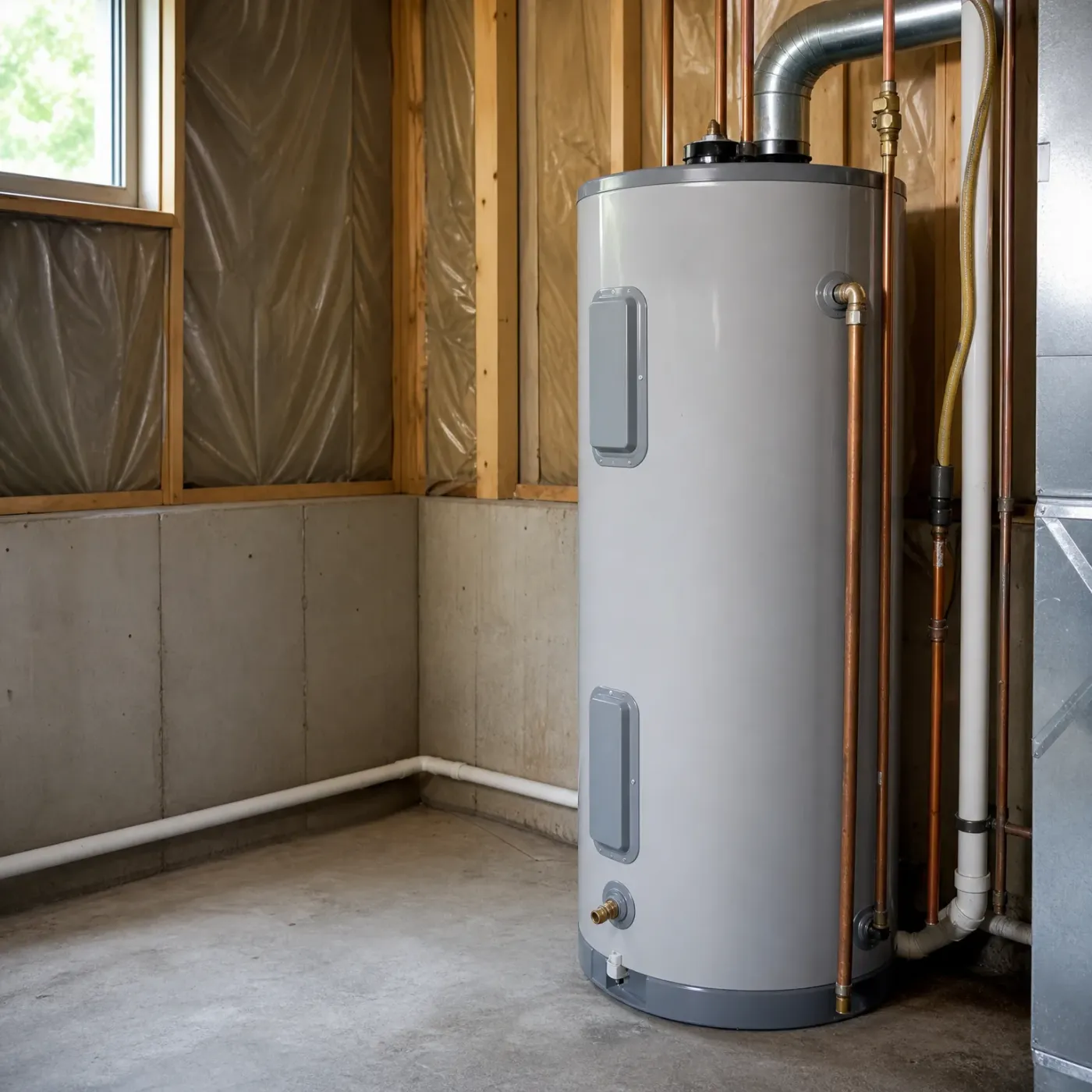
A gray cylindrical water heater stands in a basement corner with exposed wood framing, plastic vapor barrier, concrete walls and floor, copper and PVC piping, and a metal flue vent.

Get your water heater to the right pro

Fill out one short form instead of calling around.

Tell a local repair pro what your water heater is doing.

Find my pro

There's no charge for the request.

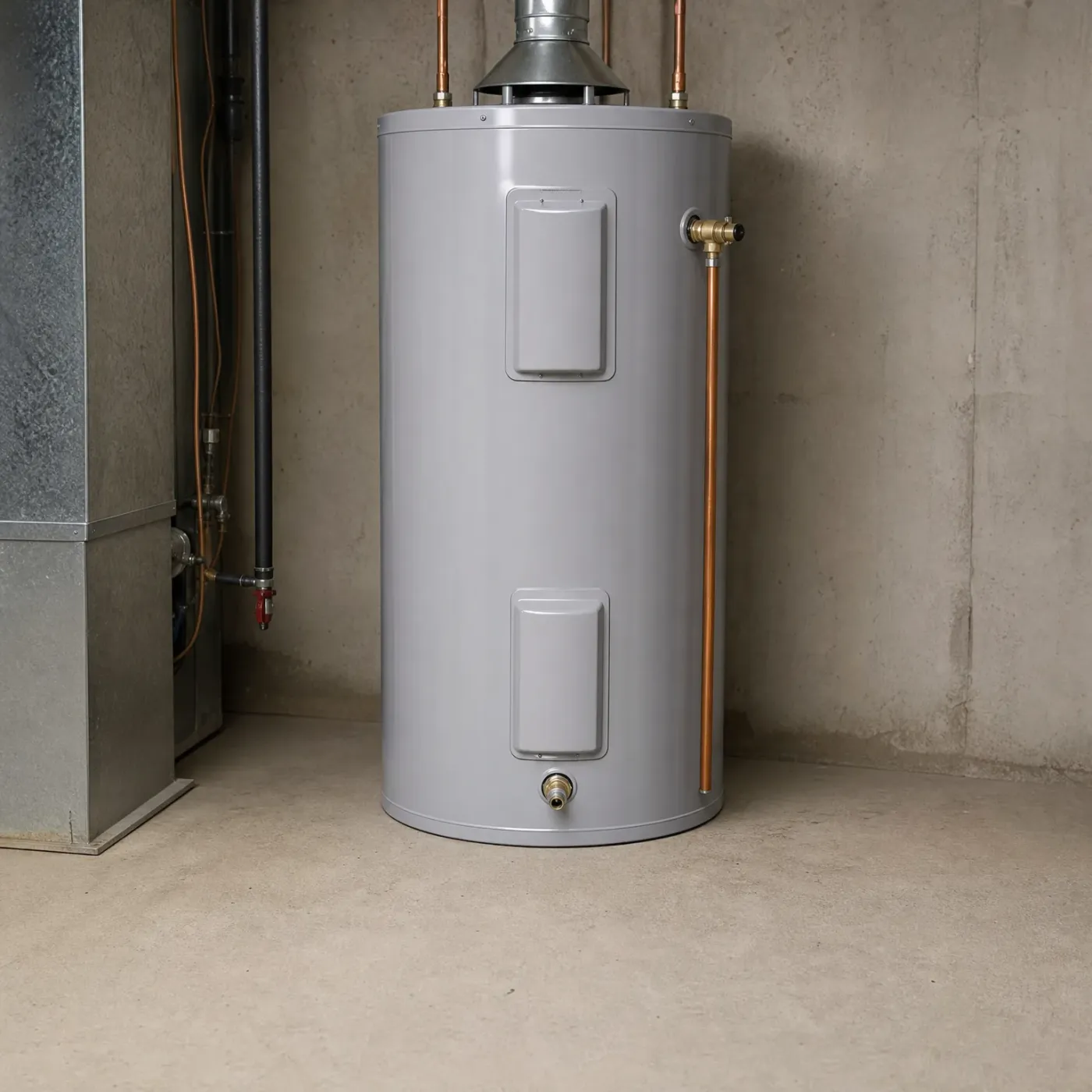
A gray cylindrical water heater with copper piping and a flue stands on a concrete floor in a basement corner beside ductwork and metal equipment.
A tank like this one, with its panels and relief valve in place, is still cycling both elements the way it should.
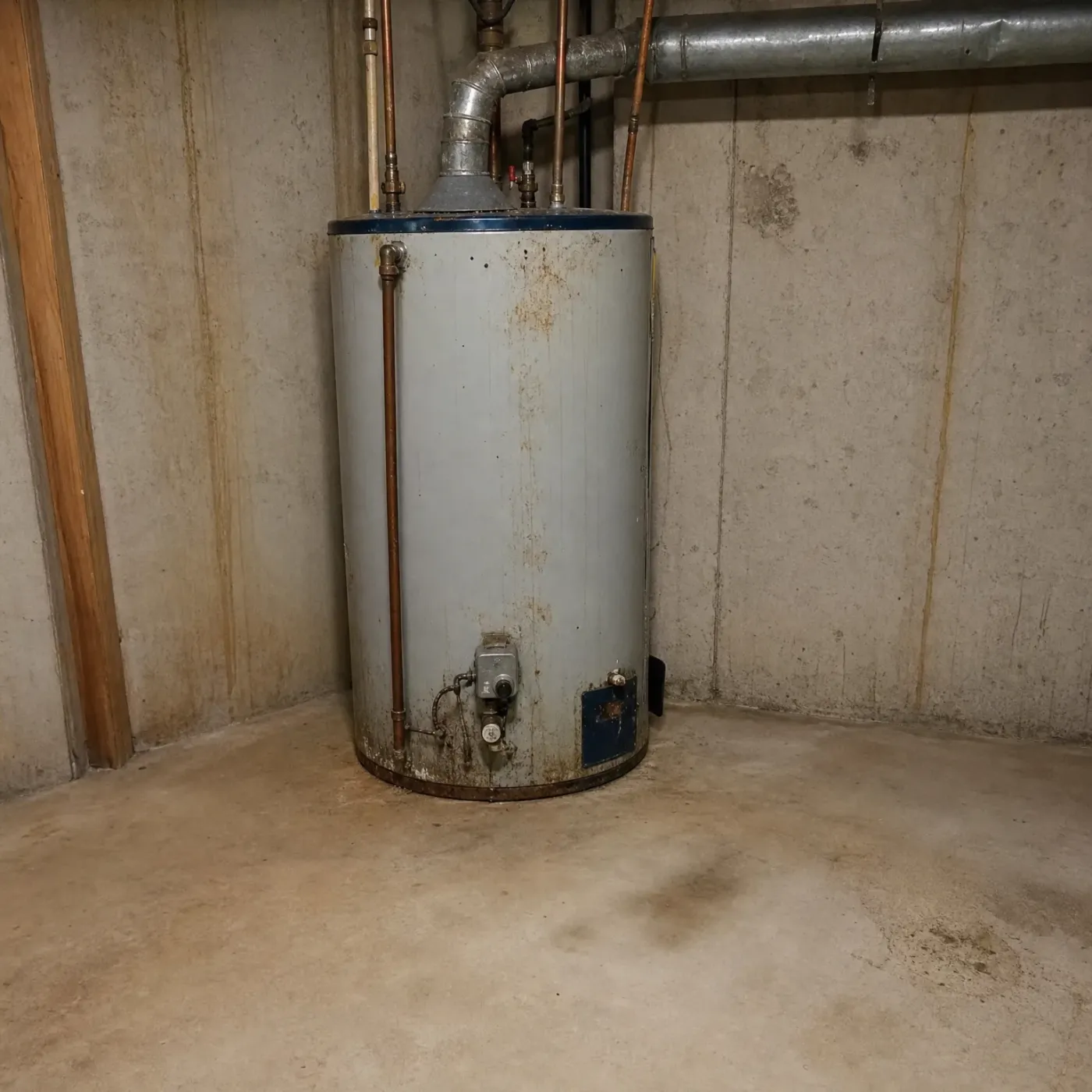
An aging gas water heater with rust streaks stands in the corner of a concrete-walled basement, with copper pipes and a metal flue duct running overhead.
Rust on the tank body and water pooling at the base mean the tank itself is failing, not just an element.

Each element answers to its own thermostat, tucked behind a small access panel on the tank. The upper one only knows what the water at the top is doing. Once it reads hot enough, it cuts power to the lower element, even if the water down there never warmed up. That's how you end up with a tank that reads fine at the top and runs cold a few minutes into a shower. Sometimes the problem shows up differently. A lower element that's failed can trip the high-limit switch built into the upper thermostat, and when that happens, the whole tank loses power until someone resets the switch by hand. Sediment makes this worse over time. It settles on the lower element, forces it to work harder to reach temperature, and wears it out sooner than it would otherwise. None of this shows up by looking. A dead element looks the same as a working one, so checking it means cutting power at the breaker and testing for continuity with a multimeter. Replacing the element itself isn't the hard part. Draining the tank first is.

How the two elements work

  • A thermostat sits behind each element's access panel and tells that element when to turn on, separate from the other one.
  • When the upper thermostat reads the water as hot enough, it shuts off power to the lower element even if that water is still cold.
  • A failed lower element can trip the high-limit switch on the upper thermostat, cutting power to the whole tank until someone resets it by hand.
  • Sediment that collects on the lower element makes it work harder to reach temperature, which shortens how long it lasts before it fails outright.
  • Testing an element means shutting off the breaker first, then checking it with a multimeter for continuity since a dead element won't show any visible damage.
  • Swapping a failed element is straightforward on paper but means draining the tank first, which is where most of the job's time actually goes.
A smiling woman with dark shoulder-length hair in a cream V-neck sweater sits at a marble counter with a glass of red wine, with a kitchen and softly lit living room behind her.
A woman in a dark green sweater laughs while seated at a marble kitchen island with a glass of red wine, with open shelving, cabinets and a living room visible behind her.
A woman with long dark hair in a cream knit sweater laughs while looking off to the side, seated at a counter with a glass of red wine, in a dimly lit living room with a sofa, lamp, framed pictures and houseplant behind her.
A smiling woman with long dark hair in a beige sweater sits at a marble kitchen counter with a glass of red wine, with a dimly lit living room behind her.

One element working

The tank still heats, just slower and less of it. You get warm water for a few minutes before it turns lukewarm, and it takes longer to recover between uses.

Get a water heater pro

Tank undersized for the house

Both elements can be working fine and you'll still run short if the tank was never sized for how many people draw hot water at once.

Get a water heater pro
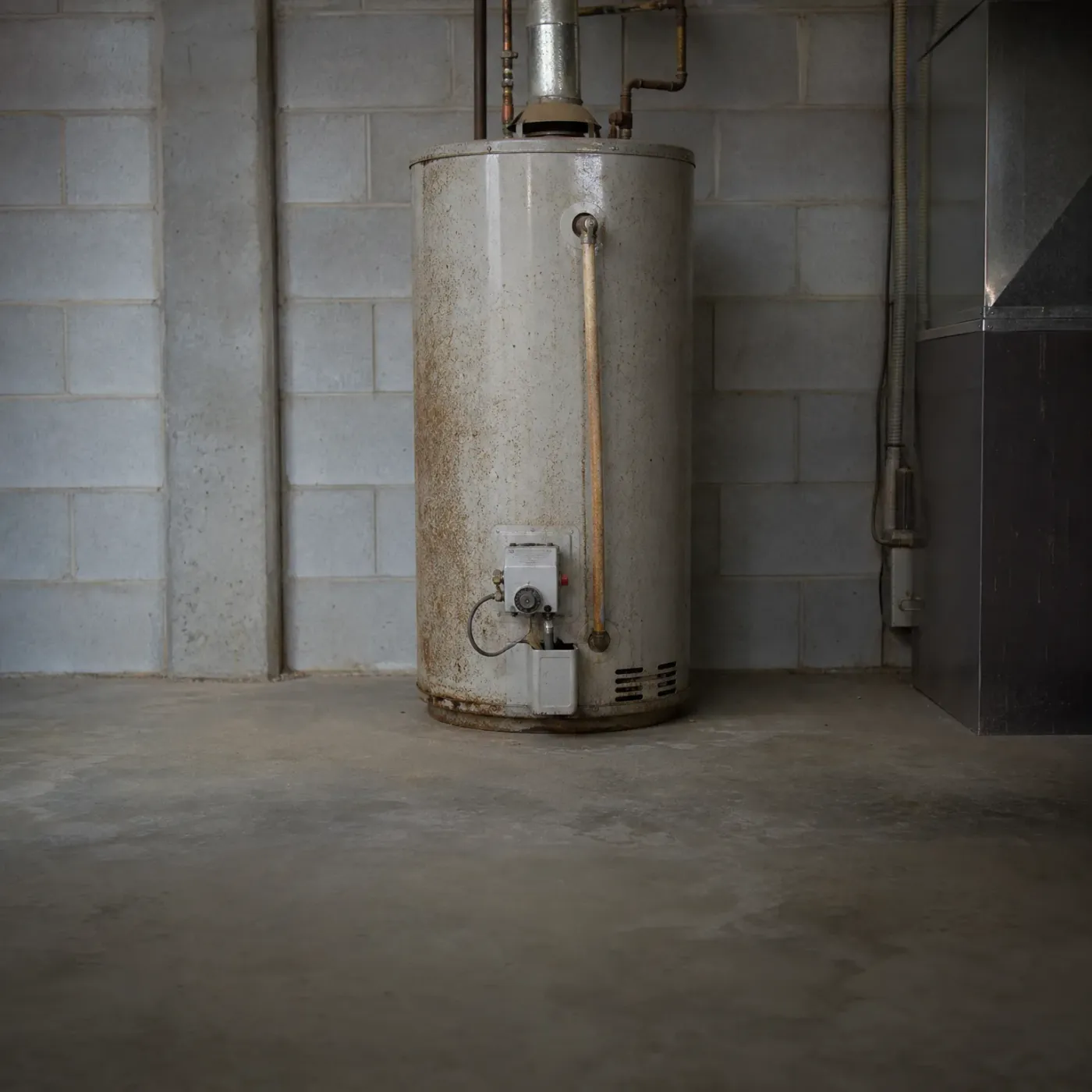
A rusted gas water heater with a flue pipe stands against a concrete block wall on a bare concrete floor, next to a dark metal duct or furnace cabinet at right.
Before you get your water heater repair
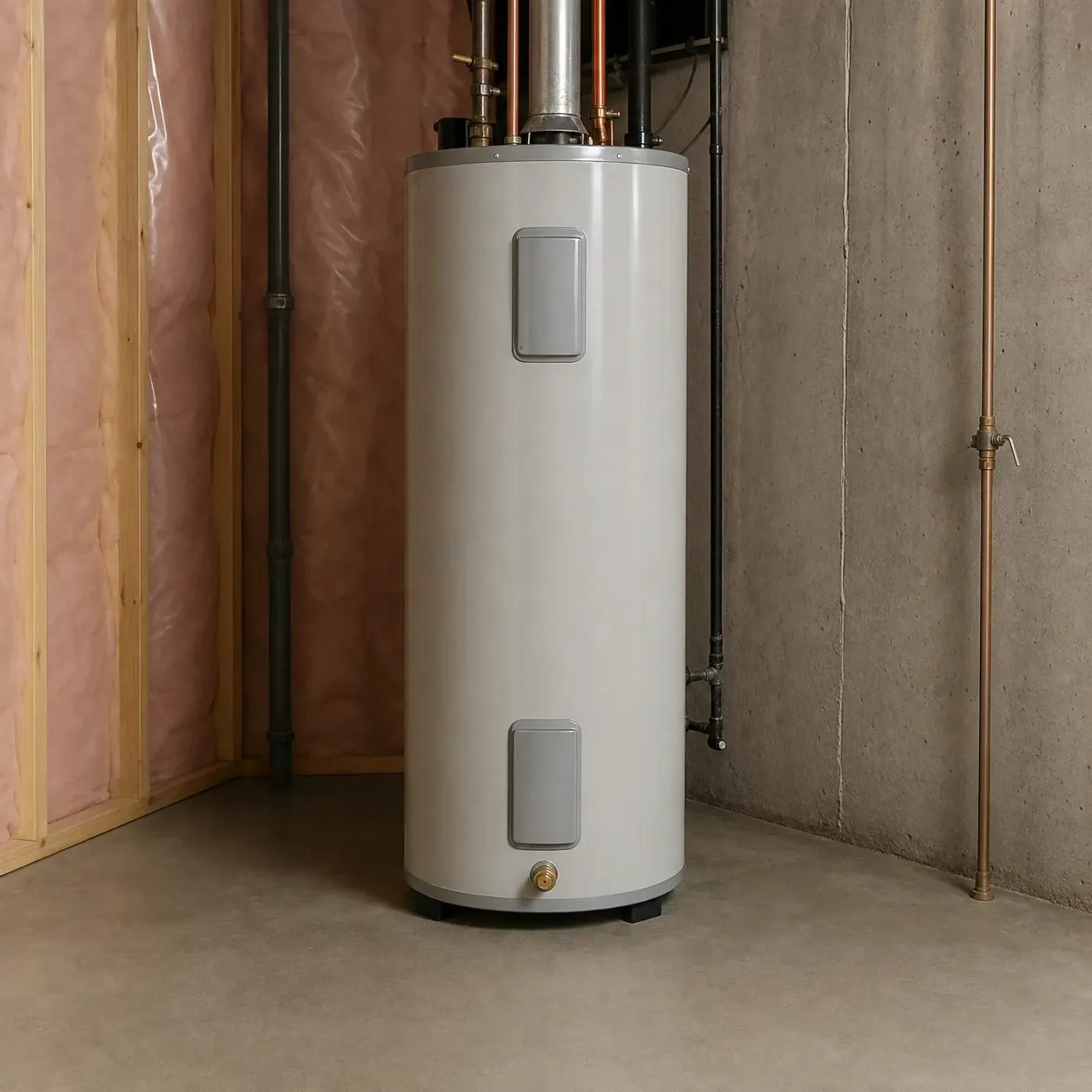
A white cylindrical water heater with two access panels and a brass drain valve stands on a concrete floor in a basement corner, beside a pink-insulated stud wall and a concrete wall with copper and black pipes.
After you get your water heater repair

Calling around for quotes means explaining the same lukewarm shower story to three or four contractors before anyone even looks at the tank.

Get matched once, and the contractor who reaches out already knows what you're dealing with, so the first conversation is about fixing it, not repeating yourself.

64.7% of homes statewide heat with electricity

Most houses in Louisiana run on electric water heaters, same as yours. That means two heating elements doing the work, and it's why a failed one still leaves you some warm water instead of none, long enough to notice but not enough to get through a shower.

ACS 2020-2024 5-year B25040

A woman in a cream cardigan and jeans stands with one hand raised facing an open front door of a gray horizontal-siding house, with a black lantern wall light, a potted shrub with yellow flowers, and a stone-faced porch column.

One element is doing the other's job

Lukewarm water from an electric tank almost always comes down to one of two things. Either a heating element has failed and the other is carrying the load by itself, or a thermostat has lost its setting and is shutting things off too early. A tank that's sized wrong for what your house draws out of it can look the same way, warm but never hot. Whichever it is, the fix calls for someone to open the panels, test both elements, and see what the thermostats are actually doing.

You don't have to sort out which one it is before you get help. A contractor who takes on water heater repair can tell the difference in minutes, and you won't need to walk through the whole story again once you're matched with one. They'll already know it's an electric tank with two elements, and they'll call knowing roughly what they're walking into, not starting from zero on your porch.

A living room corner with a light beige sofa holding a textured taupe cushion, a large ceramic vase of olive branches by a window, a framed neutral artwork on the wall, and a dark bowl with stacked books in the foreground.
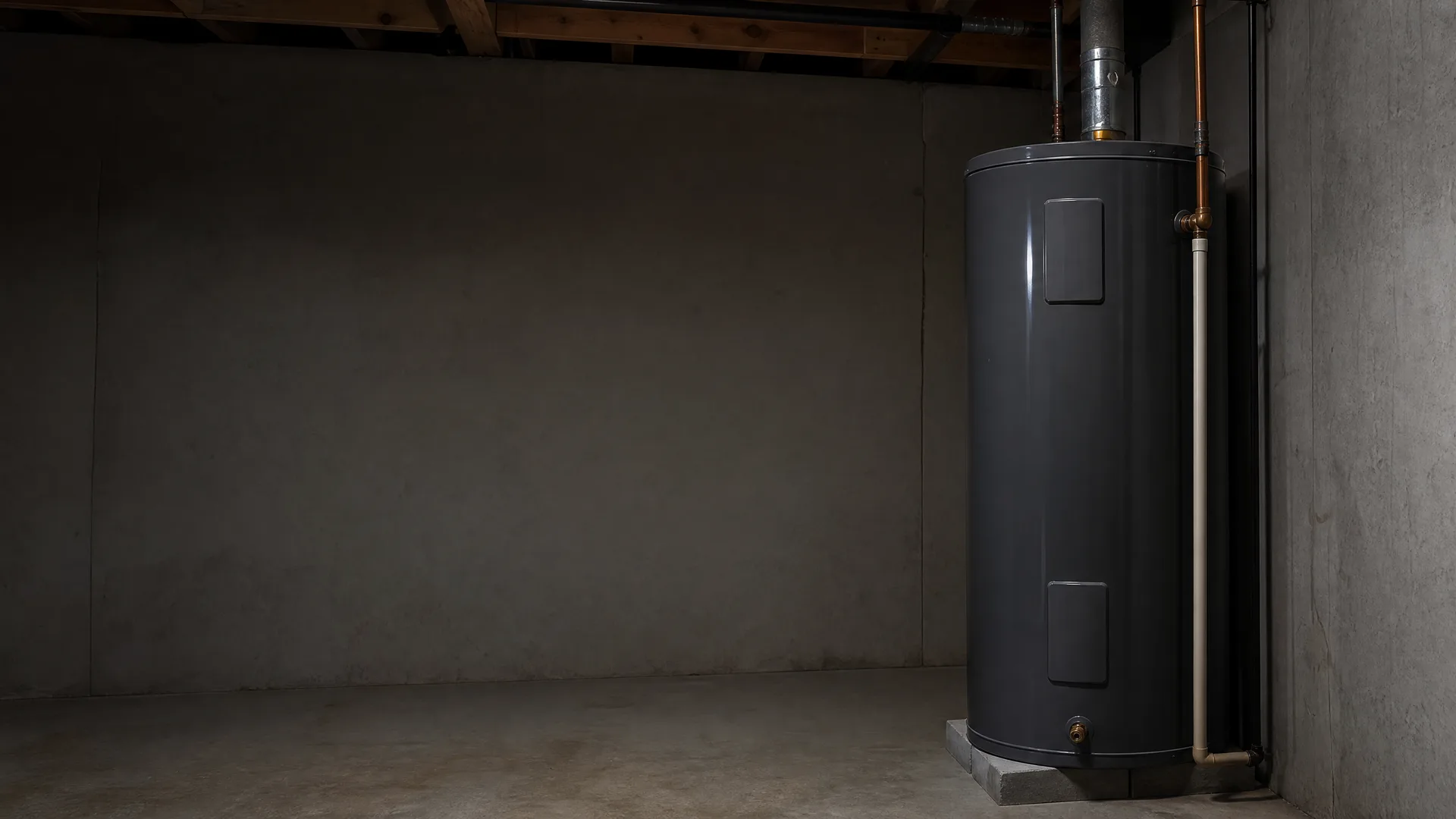
A dark gray cylindrical water heater with copper and metal pipes stands on a concrete pad in the corner of a dim basement with bare concrete walls and exposed floor joists overhead.

Matched to your water heater job

Skip searching for a water heater pro and answer a few questions instead.

Step 1 of 3: Equipment